Preparation
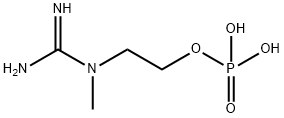
N-Methylaminoethanol (i.e., N-methylethanolamine) and cyanamide react with glacial acetic acid in methanol solvent to give inositol acetate, which then reacts with phosphoric acid to give inositol phosphate, with a yield of 71%. Inositol phosphate is dehydrated by heating under reduced pressure to give 1-(2-Hydroxyethyl)-1-methylguanidine dihydrogen phosphate.
Uses
Inositol phosphate is a novel sports health supplement and food additive, used as a high-grade supplement for athletes. Inositol phosphate is converted into inositol and creatinine in cells, providing energy to the body, increasing muscle strength and explosive power, increasing muscle volume, improving muscle flexibility, preventing muscle injury, and delaying muscle fatigue.
Originator
Aplodan,Simes,Italy,1968
Definition
ChEBI: Creatinolfosfate is a phosphoethanolamine.
Manufacturing Process
In a reactor put 80 kg of polyphosphoric acid having the following
composition: H5P3O10 - 60%; (HPO3)6 - 10%; H4P2O7 - 15%; (HPO3)x - 10%;
total content in P2O5 about 83%; this is heated to about 160°C.
Then 360 kg of creatinol phosphate are added to the polyphosphoric acid;
continue to heat for about two hours under vacuum until the reaction water is
eliminated.
The molten mass is then poured into ethanol at 95°C, the solution cooled
down to 10°C and the precipitated product separated by centrifugation. The
resulting product is dissolved in the minimum quantity of warm water and the
solution poured into ethanol.
Thus 297 kg of the phosphoric ester of the creatinol are obtained having these
characteristics: MP 240°C to 243°C.
Therapeutic Function
Cardiotonic