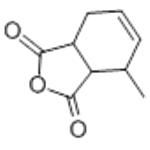
Synthesis
3.7 g (0.015 mol) of 4-bromophthalic anhydride was added to 50 ml of acetic acid solution containing a small amount (one drop) of sulfuric acid. After reflux for 2 h, the reaction mixture was evaporated to dryness to obtain crude 4-bromophthalic anhydride. Then, 2.8 g (0.015 mol) of 2-naphthaleneacetic acid and 50 mg of anhydrous sodium acetate were added to the crude product. The resulting solid mixture was heated to 275 °C under nitrogen impingement and reacted for 2 h. After cooling, a brown solid reactant was obtained. This solid was then ground with 10% sodium bicarbonate and dried under vacuum.
The dried solid mixture was then added to 1 ml of a methanol solution containing 2.1 g (0.039 mol) sodium methoxide. The solution was refluxed, and after 1 h, the reaction mixture was evaporated to dryness, dissolved in water, and the solution was extracted multiple times with ether. The aqueous layer was acidified with 6 mol HCl to obtain a red precipitate, which was then recrystallized in ethanol to give 2.5 g of the product, Tetrahydromethyl-1,3-isobenzofurandione (47%). Melting point 180.5–181.5 °C.
Chemical Properties
colorless or light yellow liquid
Uses
Methyltetrahydrophthalic Anhydride (MTHPA) is used in preparation method of conductive adhesive.
Uses
Methyltetrahydrophthalic Anhydride (abbreviation:MTHPA) has been used in the curing agents for epoxy resins, solvent-free paints,laminated boards, epoxy adhesives and so on. When used in the curing agent for epoxy resins, there are many excellent performances such as the long-term storage at room temperature, low freezing point, low volatility and low toxicity. Also widely used in motors, dry-type transformers, appliances capacitors, power capacitors, integrated circuits impregnation, casting and winding.
Flammability and Explosibility
Non flammable