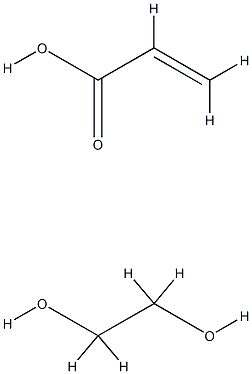
Description
Poly(ethylene glycol) diacrylate (PEGDA) is a blank slate hydrogel that gels rapidly at room temperature in the presence of a photoinitiator and light. PEGDA hydrogels are potent tools for uncovering basic cellular biology because they are considered biologically inert (“blank slate”), and their mechanical properties can be varied over an extensive range of moduli.PEGDA is an emerging scaffold for tissue engineering and regenerative medicine since polymerization can occur rapidly at room temperature, requires low energy input, has high water content, is elastic, and can be customized to include a variety of biological molecules.
Synthesis
S1, polyethylene glycol (PEG) was dried in vacuum at 50C overnight, and K2CO3 was ground and dried in vacuum at 100C overnight, and cooled in vacuum;
S2, 50g of PEG was dissolved in 100mL of anhydrous dichloromethane in a three-necked flask of 500mL, and K2CO3 was added in accordance with the amount of additions shown in Table 2, and stirred well to disperse;
S3, according to the addition amount shown in Table 2, acryloyl chloride was dissolved in anhydrous dichloromethane (1:10v/v), and slowly added drop by drop to the three-necked flask, and the reaction was carried out for 24h at room temperature under the protection of nitrogen;
S4, the mixture was filtered to remove the solids, and the supernatant was rotary evaporated at 37 to remove most of the solvent and then fully precipitated with ether and washed by ether for 3-5 times, and finally the product was completely dried in a vacuum. The product, polyethylene glycol diacrylate (PEGDA), was completely dried in vacuum.