Description
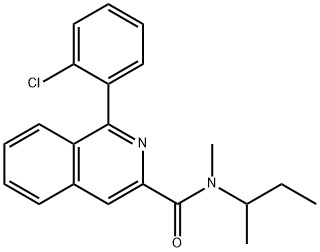
PK-11195 (85532-75-8) is a selective and potent peripheral benzodiazepine receptor, PBR (or TSPO, translocator protein) antagonist.1,2 It has been shown to chemosensitize tumor cells to a variety of chemotherapeutic agents via PBR-independent pathways.3,4 PK-11195 is also able to induce apoptosis in a variety of cell lines.5-7
Uses
PK 11195 is a high affinity peripheral benzodiazepine receptor (PBR) ligand. PK 11195 has been shown to regulate protein phosphorylation in rat brain mitochondria under control of Ca2+. PK11195 promotes mitochondrial apoptosis and blocks P-glycoprotein (Pgp)-mediated drug efflux to chemosensitize cancer cells.
Biochem/physiol Actions
PK 11195 is a peripheral benzodiazepine antagonist. It is also an antagonist for human constitutive androstane receptor (hCAR) and human pregnane X receptor (PXR). In human primary hepatocytes, PK 11195 upon demethylation elicits agonist functionality towards the receptor hCAR. PK 11195 also antagonise B-cell lymphoma 2 (Bcl-2) and may serve as a potential compound for mitochondrial targeting therapies and in the treatment of cholangiocarcinoma.
References
[1] Peripheral benzodiazepine binding sites: effect of PK 11195, 1-(2-chlorophenyl)-N-methyl-N-(1-methylpropyl)-3-isoquinolinecarboxamide. I. In vitro studies
[2] Peripheral benzodiazepine binding sites: effect of PK 11195, 1-(2-chlorophenyl)-N-methyl-N-(1-methylpropyl)-3-isoquinolinecarboxamide. II. In vivo studies
[3] ROSA-ANA GONZALEZ-POLO. PK11195 potently sensitizes to apoptosis induction independently from the peripheral benzodiazepin receptor[J]. Oncogene, 2005, 24 51: 7503-7513. DOI:
10.1038/sj.onc.1208907[4] ROLAND B WALTER. PK11195, a peripheral benzodiazepine receptor (pBR) ligand, broadly blocks drug efflux to chemosensitize leukemia and myeloma cells by a pBR-independent, direct transporter-modulating mechanism.[J]. Blood, 2005, 106 10: 3584-3593. DOI:
10.1182/blood-2005-02-0711[5] BEATRICE CHELLI . Peripheral benzodiazepine receptor ligands: mitochondrial transmembrane potential depolarization and apoptosis induction in rat C6 glioma cells[J]. Biochemical pharmacology, 2004, 68 1: Pages 125-134. DOI:
10.1016/j.bcp.2004.03.008[6] ANDREAS P. SUTTER . Peripheral benzodiazepine receptor ligands induce apoptosis and cell cycle arrest in human hepatocellular carcinoma cells and enhance chemosensitivity to paclitaxel, docetaxel, doxorubicin and the Bcl-2 inhibitor HA14-1[J]. Journal of Hepatology, 2004, 41 5: Pages 799-807. DOI:
10.1016/j.jhep.2004.07.015[7] K MAASER. Specific ligands of the peripheral benzodiazepine receptor induce apoptosis and cell cycle arrest in human colorectal cancer cells[J]. British Journal of Cancer, 2001, 85 11: 1771-1780. DOI:
10.1054/bjoc.2001.2181