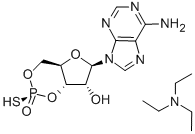
Uses
Rp-cAMPS, a cAMP analog, is a potent, competitive cAMP-induced activation of cAMP-dependent PKA I and II (Kis of 12.5 μM and 4.5 μM, respectively) antagonist. Rp-cAMPS is resistant to hydrolysis by phosphodiesterases[1][2][3][4][5][6].
References
[1] R J de Wit, et al. Inhibitory action of certain cyclophosphate derivatives of cAMP on cAMP-dependent protein kinases. Eur J Biochem. 1984 Jul 16;142(2):255-60. DOI:
10.1111/j.1432-1033.1984.tb08279.x[2] Rothermel JD, et al. A mechanistic and kinetic analysis of the interactions of the diastereoisomers of adenosine 3',5'-(cyclic)phosphorothioate with purified cyclic AMP-dependent protein kinase. Biochem J. 1988 May 1;251(3):757-62. DOI:
10.1042/bj2510757[3] Fu Y, et al. PKA and ERK, but not PKC, in the amygdala contribute to pain-related synaptic plasticity and behavior. Mol Pain. 2008 Jul 16;4:26. DOI:
10.1186/1744-8069-4-26[4] Kuriyama S, et al. Isoproterenol inhibits rod outer segment phagocytosis by both cAMP-dependent and independent pathways. Invest Ophthalmol Vis Sci. 1995 Mar;36(3):730-6. PMID:7890503
[5] Dostmann WR, et al. Probing the cyclic nucleotide binding sites of cAMP-dependent protein kinases I and II with analogs of adenosine 3',5'-cyclic phosphorothioates. J Biol Chem. 1990 Jun 25;265(18):10484-91. PMID:2162349
[6] Van Haastert PJ, et al. Competitive cAMP antagonists for cAMP-receptor proteins. J Biol Chem. 1984 Aug 25;259(16):10020-4. PMID:6088478