Application
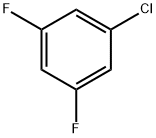
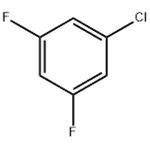
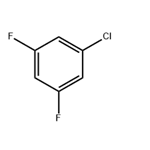
3,5-Difluorochlorobenzene can be used as an intermediate in pesticide and pharmaceutical chemistry, and can be used in the synthesis of drug molecules, hormones, and bioactive molecules. In organic synthesis transformations, the chlorine atom in 3,5-difluorochlorobenzene can be converted into a boronic acid structure or a boronic ester derivative under the catalysis of the transition metal palladium.
Synthesis
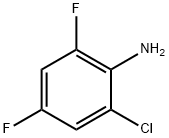
General procedure for the synthesis of 3,5-difluorochlorobenzene from 6-chloro-2,4-difluoroaniline:
1. 0.5 moles (1.0 equiv.) of 6-chloro-2,4-difluoroaniline and 200 ml of dichloromethane were added to a reaction flask and stirred until completely dissolved.
2. 0.55 moles (1.1 eq.) of N-chlorosuccinimide (NCS) was added in 5 batches, the reaction temperature was controlled at 10~15°C, and after the addition was completed, the reaction was heated to reflux for 2 hours.
3. The completion of the reaction was monitored by TLC and the pH was adjusted to 6-7 by adding 10% dilute hydrochloric acid to the reaction mixture.
4. The organic phase was separated, washed with water and rotary evaporated to dryness to give 0.44 mol (0.88 eq.) of 2,4-difluoro-5-chloroaniline.
5. 0.44 mol of 2,4-difluoro-5-chloroaniline was added to 1.5 mol (3 eq.) of 25% dilute sulfuric acid and stirred for 0.5 hr.
6. Add 0.75 mol (1.5 eq.) of sodium phosphite, control the reaction temperature at 30~35°C, slowly add 0.5 mol (1 eq.) of aqueous sodium nitrite dropwise, control the rate of dropwise acceleration so that the reaction temperature rises 4~5°C per hour.
7. Warm up to 60°C, keep the temperature stirring for 2 hours. 8.
8. leave to stratify, the organic phase is washed with water and then steam distilled. 9.
9. 0.41 moles (0.82 equivalents) of 3,5-difluorochlorobenzene were obtained by distillation, with a purity of 99.8%.