Synthesis
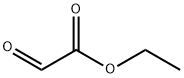
462 g of ethanol was added to 421.4 g of 50% glyoxylic acid (2.85 mol). After adding 40 g (0.406 mol) of concentrated hydrochloric acid, the mixture was heated to 55 °C over 20 minutes. The reaction mixture was then mixed with 111 g (0.80 mol) of potassium carbonate. The degree of esterification can be calculated based on the amount of potassium carbonate required for neutralization. This was 57.89%. To separate the formed potassium carbonate, an additional 400 g of ethanol was added to reduce the solubility of the salt, which was then filtered off. Finally, Ethyl glyoxalate was distilled off. The synthetic route is shown in the figure.

Figure: Synthetic Route of Ethyl glyoxalate
Chemical Properties
Clear colorless to slightly yellow solution
Uses
Ethyl glyoxylate is widely used as an intermediate in the synthesis of pharmaceuticals (high reactivity of aldehyde function). It is used in the synthesis of a biodegradable polymer, poly(ethyl glyoxylate). It is actively involved in the Friedel-Crafts alkylation reactions with thiophenes to give the corresponding secondary alcohols.
Definition
ChEBI: The ethyl ester of glyoxylic acid.