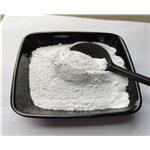
Chemical Properties
white to light yellow crystal powde
Uses
Catalyst for:
- Preparation of chromans and (E,E)-1,3-dienes via reaction of γ-substituted allenoates with aldehydes
- Solvent-free Heck reactions
Cocatalyst in:
- Regioselective carbomagnesiation of terminal alkynes and enynes with alkyl Grignard reagents
- Rhodium-catalyzed coordination-assisted regioselective alkenylation of aromatic C-H bonds with terminal silylacetylenes
- Rhodium-catalyzed hydrogenation reactions
- Platinum-catalyzed allylation reactions
reaction suitability
reaction type: Buchwald-Hartwig Cross Coupling Reaction
reaction type: Heck Reaction
reaction type: Hiyama Coupling
reaction type: Negishi Coupling
reaction type: Sonogashira Coupling
reaction type: Stille Coupling
reaction type: Suzuki-Miyaura Coupling
reagent type: ligand
reaction type: Cross Couplings
Synthesis
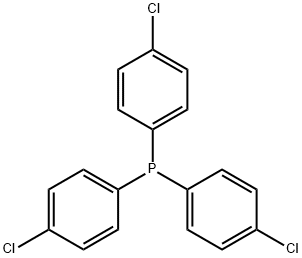
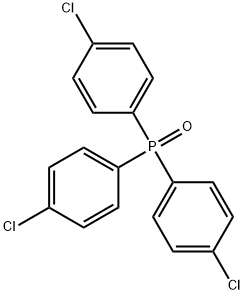
The general procedure for the synthesis of tris(4-chlorophenyl)phosphine oxide from tris(4-chlorophenyl)phosphine oxide was as follows: 5100 mg (0.262 mmol) of tris(4-chlorophenyl)phosphine oxide was reacted with 6 mg of I (26 μmol) and 130 μL (0.52 mmol) of tributylphosphine in 1 mL of mixed solvent of acetonitrile/THF (1:1, v/v) under nitrogen protection The reaction was carried out at room temperature for 10 min. After stirring for 10 min at room temperature, the reaction was quenched with 100 μL HO. The reaction mixture was diluted with 10 mL of ethyl acetate and washed three times (5 mL each) with saturated aqueous NaHCOsolution. The organic phase was dried with NaSO, filtered and concentrated under reduced pressure. The residue was recrystallized with 2 mL of methanol, the crystals were collected by filtration, washed and dried under vacuum to give 95 mg (0.260 mmol, 99%) of tris(4-chlorophenyl)phosphine.
References
[1] Patent: WO2011/123037, 2011, A1. Location in patent: Page/Page column 23-24
[2] Journal of Organic Chemistry, 2008, vol. 73, # 4, p. 1524 - 1531
[3] Chinese Chemical Letters, 2014, vol. 25, # 1, p. 176 - 178
[4] Russian Journal of General Chemistry, 2015, vol. 85, # 5, p. 1156 - 1160
[5] Zh. Obshch. Khim.,