Description
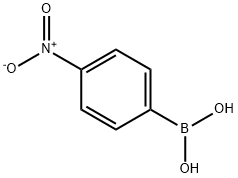
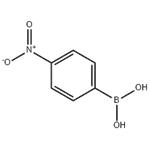
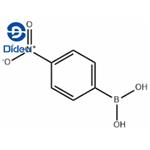
4-Nitrobenzeneboronic acid is an arylboronic acid building block that has been used in the synthesis of phenols.
Chemical Properties
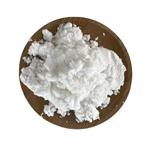
White to brown powder or crystal
Uses
Reagent used for
- Ligand-free palladium-catalyzed Suzuki-Miyaura cross-couplings
- Ruthenium catalyzed direct arylation of benzylic sp3 carbons of acyclic amines
- Diels-Alder or C-H activation reactions
- Regioselective Suzuki-Miyaura coupling and tandem palladium-catalyzed intramolecular aminocarbonylation and annulations
- N-arylation of phenylurea using copper acetylacetonate catalyst
- Environmentally benign one-pot synthesis through a double arylation process
- Copper-mediated cyanations
- copper-catalyzed arylations
- Regioselective glycosylations
- Suzuki couplings followed by arylations
- X-ray absorption on rhodium-grafted hydrotalcite catalyst for heterogeneous 1,4-addition reaction of organoboron reagents to electron deficient olefins
Reagent used in Preparation of
- Combretastatin analogs as potential antitumor agents
- Human immunodeficiency virus (HIV) protease inhibitors with antiviral activities against drug-resistant viruses
Uses
4-Nitrophenylboronic Acid is a useful synthetic intermediate. It is a reagent used for ligand-free palladium-catalyzed Suzuki-Miyaura cross-couplings, Ruthenium catalyzed direct arylation of benzylic sp3 carbons of acyclic amines and Diels-Alder or C-H activation reactions.
Synthesis
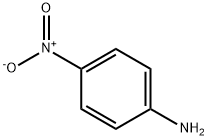
GENERAL METHOD: To a solution of 4-nitroaniline (0.5 mmol, 1.0 eq.) in methanol (1.0 mL) was added hydrochloric acid (0.5 mL, 1.5 mmol, 3.0 eq.) followed by water (0.5 mL). The reaction mixture was stirred for 2 minutes and then sodium nitrite solution (0.25 mL) was added. Sodium nitrite solution was prepared by dissolving 35 mg of sodium nitrite in water (0.25 mL). The mixture was stirred at 0-5 °C for 30 min, followed by the addition of hydrochloric acid (135 mg, 1.5 mmol, 3.0 equiv) in methanol (1.0 mL). Stirring of the reaction mixture was continued for 60 min. Upon completion of the reaction, it was diluted with the addition of water (10 mL) and extracted with dichloromethane (50 mL, 3 times). The organic layers were combined, dried over anhydrous sodium sulfate and concentrated under reduced pressure to give 4-nitrophenylboronic acid.
References
[1] Synlett, 2014, vol. 25, # 11, p. 1577 - 1584
[2] Chemistry - A European Journal, 2014, vol. 20, # 22, p. 6608 - 6612