Application
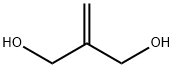
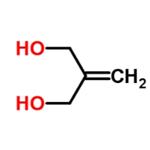
2-Methylene-1,3-propanediol, commonly known as isobutylene glycol, can be used to synthesize platelet-active factor inhibitors due to its unique methylene branched structure; it is also a crosslinking agent that can esterify with alkyd and polyester resins, effectively improving the thermal stability of polymers.
Chemical Properties
clear colorless to pale yellow viscous liquid
Synthesis
General procedure for the synthesis of 2-methylene-1,3-propanediol from 2-methylenepropane-1,3-diyl diacetate: allyl alcohol (1 eq.) was dissolved with acetic anhydride (1.2 eq.) in dichloromethane (DCM, concentration ca. 1 M) at 0 °C. Subsequently, pyridine (1 eq.) and 4-dimethylaminopyridine (DMAP, 0.1 mol%) were added to the reaction system. The reaction mixture was kept stirred at 0 °C for 30 min and then gradually warmed up to room temperature. After completion of the reaction, the reaction was quenched with 2N hydrochloric acid solution, the organic layer was separated, washed sequentially with water and brine and finally dried with anhydrous sodium sulfate. The solvent was removed by careful evaporation under reduced pressure to give pure 2-methylene propane-1,3-diyl diacetate (2d) without further purification. Subsequent processing was carried out via Method B. Specifically, purification by column chromatography (eluent ratio hexane:ethyl acetate = 20:1) afforded 2-methylene-1,3-propanediol as a colorless oil (20 g, 91% yield). The analytical data of the resulting compound were in agreement with literature reports.
References
[1] Patent: WO2018/53322, 2018, A1. Location in patent: Paragraph 0090; 00143
[2] J. Appl. Chem. USSR (Engl. Transl.), 1988, vol. 61, # 4, p. 853 - 855
[3] Zhurnal Prikladnoi Khimii (Sankt-Peterburg, Russian Federation), 1988, vol. 61, # 4, p. 934 - 937
[4] Synlett, 2008, # 15, p. 2321 - 2325