Chemical Properties
white amorphous powder
Uses
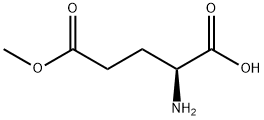
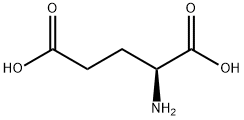
L-Glutamic acid 5-methyl ester is a protected form of L-Glutamic acid (G596960). L-Glutamic acid is a nonessential amino acid that is important to the mammalian central nervous system. L-Glutamic acid is also a neurotransmitter for cone photoreceptors in the human brain and is used as a treatment for patients who have liver disease accompanied by encephalopathy (a condition termed ‘hepatic coma’).
Definition
ChEBI: L-glutamic acid 5-methyl ester is a glutamic acid 5-methyl ester having L-configuration. It is a L-glutamic acid derivative, a non-proteinogenic L-alpha-amino acid and a glutamic acid 5-methyl ester.
reaction suitability
reaction type: solution phase peptide synthesis
Synthesis
L-glutamic acid (22.1 g, 0.15 mol) was suspended in methanol (450 mL) at room temperature and under nitrogen protection. Subsequently, trimethylsilyl chloride (TMSCl, 35.9 g, 0.33 mol) was slowly added dropwise over a period of 5 min, at the end of which most of the solid was observed to be dissolved. Stirring of the reaction mixture was continued for 5 min and the progress of the reaction was monitored by thin layer chromatography (TLC, Spreader: 15% ammonia in methanol solution, Color Developer: ninhydrin) to confirm that only traces of the feedstock were present and that no bis-methyl esterified product was generated. After stirring again for 5 minutes, the reaction mixture was concentrated using a rotary evaporator and subsequently dried in a vacuum oven at 40 °C to give pure L-glutamic acid-5-methyl ester as a white solid. Yield: 30.0 g (100% yield). The structure of the product was confirmed by 1H NMR (300 MHz, CD3OD, ppm) δ 2.2 (2H, m), 2.6 (2H, m), 3.7 (3H, s), 4.1 (1H, t) and 13C NMR (75 MHz, CD3OD, ppm) δ 26.6, 30.4, 52.5, 53.2, 171.4, 174.3.
References
[1] Patent: US2016/16890, 2016, A1. Location in patent: Paragraph 0163
[2] Bioorganic and Medicinal Chemistry Letters, 2007, vol. 17, # 13, p. 3793 - 3797
[3] Tetrahedron Letters, 2010, vol. 51, # 9, p. 1333 - 1335
[4] Synthesis, 1987, # 7, p. 635 - 637
[5] Organic Process Research and Development, 2004, vol. 8, # 1, p. 72 - 85