Reactivity Profile
Saturated aliphatic hydrocarbons, such as n-Octacosane, may be incompatible with strong oxidizing agents like nitric acid. Charring of the hydrocarbon may occur followed by ignition of unreacted hydrocarbon and other nearby combustibles. In other settings, aliphatic saturated hydrocarbons are mostly unreactive. They are not affected by aqueous solutions of acids, alkalis, most oxidizing agents, and most reducing agents. When heated sufficiently or when ignited in the presence of air, oxygen or strong oxidizing agents, they burn exothermically to produce carbon dioxide and water.
Synthesis
A method of preparing n-octacosane in the steps of:
(1) take 2773 g (10 mol) of brominated n-tetradecane and set aside;
(2) Weigh 241.5 g (10.5 mol) of sodium metal and cut it into small thin strips measuring about 1×3 cm2, set aside;
(3) in the reaction kettle put 50g bromine n-tetradecane as well as 20g sodium metal, stirring to warm up to 80 , withdraw the heat source, relying on the reaction heating, and maintained at 120 , constantly adding the remaining bromine n-tetradecane dropwise, and add sodium metal, to maintain a slight reflux state, the addition of the material is completed, the control of the temperature of 160 , the constant temperature for 2 hours;
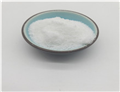
(4) sequentially add 400 g of 95% ethanol reaction after adding 1000 ml of water, divided into organic matter, water washing to neutral, dried with anhydrous magnesium sulfate, distillation to collect 140 / 1 mmHg before the fraction, the remaining fraction washed with concentrated sulfuric acid to light yellow, washed with water to neutral, drying the proceeds of benzene with repeated purification three times, drained, to obtain the white crystalline eicosanoctadecane as 1.38 Kg, mp60-62 . Said brominated n-tetradecane of sodium metal molar ratio of 1:1.01.
Purification Methods
Purify it by forming its adduct with urea, washing it and crystallising it from acetone/water. [McCubbin Trans Faraday Soc 58 2307 1962.] Crystallise it then from hot filtered isopropyl ether solution (10mL/g). [Beilstein 1 IV 588.]