Uses
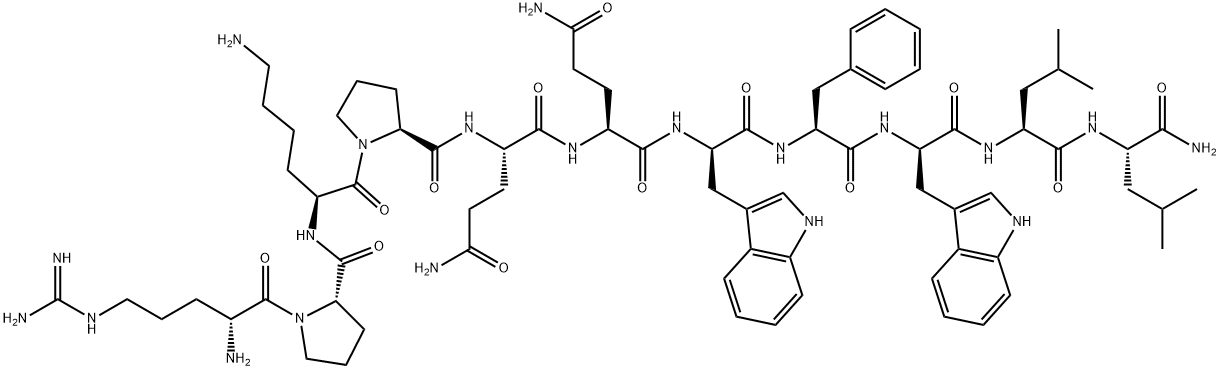
Spantide I, a substance P analog, is a selective NK1 receptor antagonist, with Ki values of 230 nM and 8150 nM for NK1 and NK2 receptor, respectively. Spantide I provides an approach to reduce type 1 and enhance the type 2 cytokine IL-10 in the infected cornea, leading to a significant reduction in corneal perforation[1][2][3].
in vivo
Spantide I (50 and 100 nM perfused through the cerebral ventricles) causes a complete respiratory arrest in all of the examined animals[2].
Spantide I (36 μg/mouse, ip daily) significantly decreases the number of perforated corneas, bacterial counts, and PMNs. Spantide I also downregulates the mRNA levels for type I cytokines (e.g., IFN-γ) as well as MIP-2, IL-6, TNF-α, and IL-1β[3].
| Animal Model: | Female, 8-week-old C57BL/6 (B6) and BALB/c mice[3]. |
| Dosage: | 36 μg/mouse. |
| Administration: | IP on days -1 and 0 (day of infection) and daily through 5 days pi (post infection). |
| Result: | At 3 and 5 days pi, compound-treated mice had significantly less severe ocular disease than did the PBS-treated mice.
Contained significantly fewer PMNs than the corneas of PBS-treated mice at 3 and 5 days pi.
Significantly reduced levels of corneal TNF-α mRNA at 3 and 5 days pi.
Significantly reduced the level of IL-18 mRNA at 1 day pi.
|
References
[1] J C Beaujouan, et al. Higher potency of RP 67580, in the mouse and the rat compared with other nonpeptide and peptide tachykinin NK1 antagonists. Br J Pharmacol. 1993 Mar;108(3):793-800. DOI:
10.1111/j.1476-5381.1993.tb12880.x[2] M Zubrzycka, et al. Comparison of antagonistic properties of substance P analogs, spantide I, II and III, on evoked tongue jerks in rats. Endocr Regul. 2000 Mar;34(1):13-8. PMID:10808247
[3] Linda D Hazlett, et al. Spantide I decreases type I cytokines, enhances IL-10, and reduces corneal perforation in susceptible mice after Pseudomonas aeruginosa infection. Invest Ophthalmol Vis Sci. 2007 Feb;48(2):797-807. DOI:
10.1167/iovs.06-0882