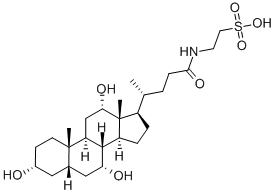
Background
Both in humans and experimental
animals, Taurocholic acid irritates the gastric mucosa and causes the reverse
diffusion of acid through the broken barrier[3].
Specific Modeling Methods
Rat: Donryu strain rats male
230-240 g &bull
Administration: 30-300 mg/kg p.o single
dose.
Note
After rats have fasted for 24 hours, their pylorus is ligated under ether anesthesia. Fifteen minutes after pylorus ligation, medication is administered to the rats.
The pylorus-ligated rats are then placed in cages with restricted movement.
Subsequently, the cages are immersed in a water bath maintained at 23°C until the water level reaches the xiphoid process of the rats, lasting for 7 hours.
Seven hours later, the animals are sacrificed under ether anesthesia, and the stomach of each animal is removed. The gastric contents are collected through the esophagus and analyzed for volume and acidity.
Modeling Indicators
Molecular Changes: Significant reductions in acidity and pepsin activity were observed, along with an increase in Na+ concentration. However, there was no effect on gastric juice volume or K+ concentration.
Correlated Product(s): Aspirin (HY-14654)
Opposite Product(s): L-Glutamine (HY-N0390)