Chemical Properties
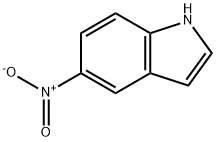
Yellow-Green Cyrstalline Solid, soluble in ethanol, diethyl ether, propylene glycol, petroleum ether and most non-volatile oils, insoluble in glycerol and mineral oils.
Application
Reactant for preparation of:
-
Pharmaceutically active 2-oxo-1-pyrrolidine analogues
-
Tryptophan dioxygenase inhibitors pyridyl-ethenyl-indoles as potential anticancer immunomodulators
-
Protein Kinase Inhibitors and antiproliferative agents
-
Positive Allosteric Modulators of Metabotropic Glutamate Receptor 4 (mGlu4)
-
Antifungal agents
-
Cannabinoid receptor type 1 (CB1) antagonists
-
Potential anticancer agents
-
Potential antivascular agents
-
Selective Anti-leukemic agents
-
Anti human immunodeficiency virus subtype 1 (HIV-1) agents
Uses
5-Nitroindole (cas# 6146-52-7) is a reagent involved in the synthesis of a variety of biochemical compounds, including: 2-oxo-1-pyrrolidine analogs, mGlu4 allosteric modulators, protein kinase inhibitors, antiproliferative agents, anti-HIV 1 agents, antifungal agents, anti-leukemic agents, antivascular agents, anticancer agents, and cannabinoid receptor type 1 (CB1) antagonists.
Synthesis
In 500ml round bottom flask add 27.2g2-sodium-1-acetylindole (0.1mo1), add 100ml acetic acid, cool down to 12C, in 1h dropwise finish 19ml fuming nitric acid, the reaction is complete, carefully poured into 250ml crushed water, add 160gNaOH, slowly raise the temperature to 70°C, keep for 20h, pumping filtration, wash with 2*100 ml ice water washing, drying, obtained 14.6g of golden yellow crystals 5-Nitroindole, yield 90.1%, purity 98.5%.
Purification Methods
Decolourise (charcoal) 5-nitroindole and recrystallise it twice from aqueous EtOH or recrystallise it from octane. It has UV: 265 and 324nm (EtOH). [Beilstein 20 III/IV 3194, 20/7 V 41.]