Description
Ginsenosides are pharmacologically active natural compounds from ginseng and other plants of the genus
Panax. Structurally, they are steroid glycosides derived from the triterpene squalene. Ginsenoside Rg
2 is a protopanaxatriol that is more abundant in some
Panax species (
e.g., white and red
P. ginseng) than others. This ginsenoside and its metabolites have diverse
in vitro and
in vivo effects, including neuroprotective, anti-
inflammatory, and anti-
diabetic actions. It also protects against DNA damage and apoptosis induced by ultraviolet light. Notably, this ginsenoside is increased by the metabolism of other bioactive ginsenosides during the steaming or heating of plant materials, particularly in
P. quinquefolium.
Chemical Properties
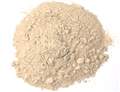
White solid
Uses
20(S)-Ginsenoside Rg2 is used as an aldose reductase inhibitor and my exert anti-inflammatory and immunomodulatory activity. It exists as a bioactive metabolite of the ginsenoside component of Panax ginseng.
Definition
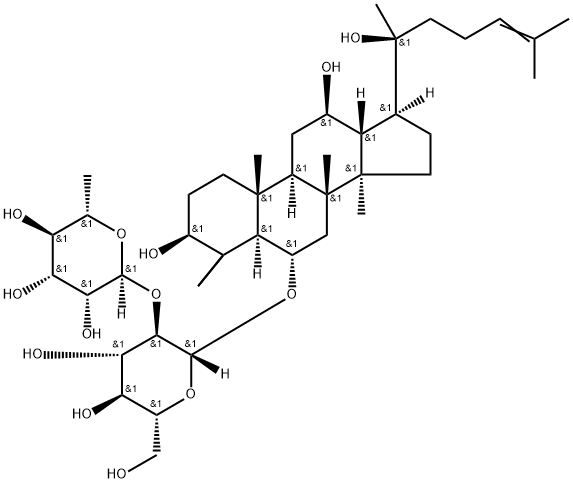
ChEBI: Ginsenoside Rg2 is a ginsenoside found in Panax species that is dammarane which is substituted by hydroxy groups at the 3beta, 6alpha, 12beta and 20 pro-S positions, in which the hydroxy group at position 6 has been converted to the corresponding alpha-L-rhamnopyranosyl-(1->2)-beta-D-glucopyranoside, and in which a double bond has been introduced at the 24-25 position. It has a role as a plant metabolite, a cardioprotective agent and an anticoagulant. It is a beta-D-glucoside, a 12beta-hydroxy steroid, a 3beta-hydroxy steroid, a ginsenoside, a tetracyclic triterpenoid, a disaccharide derivative, a 20-hydroxy steroid and a 3beta-hydroxy-4,4-dimethylsteroid. It derives from a hydride of a dammarane.
in vivo
G-Rg1 and Ginsenoside Rg2 (G-Rg2) reduce the escape latencies on the last two training days compared to the Alzheimer's disease (AD) model group (p<0.05). In the spatial exploration test, the total time spent in the target quadrant and the number of mice that exactly crossed the previous position of the platform are clearly shorter and lower, respectively, in the AD model group mice than in the normal control group mice (p<0.01), a trend that is reversed by treatment with G-Rg1 and Ginsenoside Rg2 (G-Rg1, p<0.01; Ginsenoside Rg2, p<0.05). Treatment with G-Rg1 and Ginsenoside Rg2 effectively improve cognitive function of the mice that have declined due to AD. G-Rg1 and Ginsenoside Rg2 reduce Aβ1-42 accumulation in APP/PS1 mice. In the G-Rg1 and Ginsenoside Rg2 treated mice, the pathological abnormalities observed in the APP/PS1 mice are gradually ameliorated. Clear nucleoli and light brown, sparsely scattered Aβ deposits are visible[2].
References
[1] GUIZHI ZHANG . Panax ginseng ginsenoside-Rg2 protects memory impairment via anti-apoptosis in a rat model with vascular dementia[J]. Journal of ethnopharmacology, 2008, 115 3: Pages 441-448. DOI:
10.1016/j.jep.2007.10.026[2] YOUNG-SUK CHO. Ginsenoside rg2 inhibits lipopolysaccharide-induced adhesion molecule expression in human umbilical vein endothelial cell.[J]. Korean Journal of Physiology & Pharmacology, 2013, 17 2: 133-137. DOI:
10.4196/kjpp.2013.17.2.133[3] HAI-DAN YUAN. Ginsenoside Rg2 induces orphan nuclear receptor SHP gene expression and inactivates GSK3β via AMP-activated protein kinase to inhibit hepatic glucose production in HepG2 cells[J]. Chemico-Biological Interactions, 2012, 195 1: Pages 35-42. DOI:
10.1016/j.cbi.2011.10.006[4] SE EUN HA. Effects of ginsenoside Rg2 on the ultraviolet B-induced DNA damage responses in HaCaT cells.[J]. Naunyn-Schmiedeberg’s archives of pharmacology, 2010, 382 1: 89-101. DOI:
10.1007/s00210-010-0522-9[5] IL-WOUNG KIM. A new validated analytical method for the quality control of red ginseng products.[J]. Journal of Ginseng Research, 2013, 37 4: 475-482. DOI:
10.5142/jgr.2013.37.475