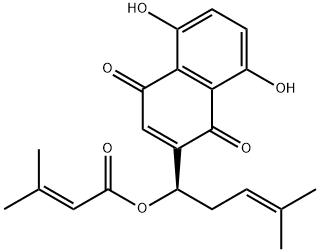
β,β-Dimethylacrylshikonin (0.1% suspension in PBS, applied topically on wounds, daily for 12d) accelerates Hydrocortisone (HY-N0583)-induced impaired wound healing in rats[2].
β,β-Dimethylacrylshikonin (1 or 2 mg/kg, i.p., on alternate days) suppresses tumor growth in BT-549 xenograft mice model by inhibiting STAT3 phosphorylation[3].
β,β-Dimethylacrylshikonin (0.5-1.5 mg/kg, i.p.) suppresses tumor growth in MFC gastric xenograft mice model[4].
| Animal Model: | Hydrocortisone induced impaired wound healing in cutaneous punch wound rat model[1] |
| Dosage: | 0.1% suspension in PBS; Hydrocortisone (30mg/kg, i.m., daily, 11d) |
| Administration: | applied topically on wounds, daily for 11days |
| Result: | HE staining: Showed more number of cells and vessels in the granulation tissue, and enhanced epidermal regeneration and collagen synthesis.
Enhanced the formation and migration of the epidermis over the wound.
Increased gap closure during normal and impaired healing |
| Animal Model: | Athymic BALB/c nu/nu female mice (6- 8 week-old, 18-22 g), BT-549 cells were injected subcutaneously into the right thigh root of mice[3]. |
| Dosage: | 1 or 2 mg/kg |
| Administration: | i.p., on alternate days |
| Result: | Decreased the expression of Ki67, CyclinB1 and CDK1 in tumor.
Up-regulated Bax expression and down-regulated Bcl-2 expression.
Increased the expression of E-cadherin and decreased N-cadherin and vimentin.
Decreased the level of p-STAT3 without changing total STAT3 levels.
|