Uses
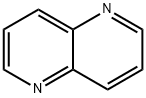
1,5-Naphthyridine is one of the six possible isomers of diazanaphthalenes containing one nitrogen atom in each ring without any at a bridgehead position, exhibiting a pKa of 2.91[6]. Fused 1,5-naphthyridines serve as structural components in fused porphyrin dimers or biological sensors for Cu2+ ions[7]. Metal complexes of 1,5-naphthyridine with platinum or europium function as emissive dyes in light-emitting diodes and exciton-blocking layers in solar cells[8].
Synthesis
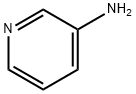
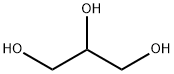
Synthesis of 1,5-naphthyridine (4): To a round bottom flask was added 3-aminopyridine (1 g, 10.63 mmol), sodium m-nitrobenzenesulfonate (3.59 g, 15.95 mmol), glycerol (3.33 mL, 46.85 mmol), concentrated sulfuric acid (5.92 mL, 111.53 mmol) and water (3 mL). The reaction mixture was heated to 150 °C and stirred continuously for 2.5 hours. Upon completion of the reaction, it was cooled to room temperature and the pH was adjusted to 8 with 4 M sodium hydroxide solution, followed by extraction with ethyl acetate (5 x 30 mL). The organic phases were combined, washed with saturated saline, dried over anhydrous sodium sulfate and concentrated under reduced pressure. Purification by column chromatography (petroleum ether/ethyl acetate=1:1) afforded the target product 1,5-naphthyridine (622 mg, 45% yield) as a yellow solid. Melting point: 74~75°C (literature value 75°C). 1H NMR (400MHz, CDCl3): δ9.04-8.96 (m, 2H), 8.43 (d, J=8.4Hz, 2H), 7.66 (dd, J=8.4,4.1Hz, 2H).
Purification Methods
Purify 1,5-naphthyridine by repeated sublimation. The picrate crystallises from EtOH with m 200o(dec). [UV: Armarego Physical Methods in Heterocyclic Chemistry (Ed Katritzky, Academic Press) Vol III 133 1971, Beilstein 23 II 178, 23 III/IV 1235.]
References
[1] Synthetic Communications, 2011, vol. 41, # 12, p. 1843 - 1851
[2] Tetrahedron Letters, 2002, vol. 43, # 20, p. 3747 - 3750
[3] Organic Letters, 2000, vol. 2, # 7, p. 875 - 878
[4] Chemistry - A European Journal, 2017, vol. 23, # 53, p. 13046 - 13050
[5] Bioorganic and Medicinal Chemistry Letters, 2015, vol. 25, # 16, p. 3251 - 3255
[6] Paudler, W. W., & Kress, T. J. (1970). The naphthyridines.
Advances in Heterocyclic Chemistry,
11, 123–175.
https://doi.org/10.1016/s0065-2725(08)60775-8[7]
Masdeu, C., Fuertes, M., Martin-Encinas, E., Selas, A., Rubiales, G., Palacios, F., & Alonso, C. (2020). Fused 1,5-Naphthyridines: Synthetic Tools and Applications. Molecules, 25(15), 3508.
https://doi.org/10.3390/molecules25153508 [8]
Verma, V. A. (2026). Design, synthesis of novel 1, 5-naphthyridine derivatives and their TD-DFT investigation, ADMET, molecular docking, and biological evaluation. Journal of Molecular Structure, 1375, 146862.
https://doi.org/10.1016/j.molstruc.2026.146862