Description
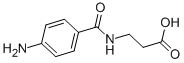
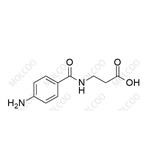
N-(4-Aminobenzoyl)-beta-alanine is a molecule that was identified in the 1960s and has been used extensively for research purposes. It is a prodrug that is converted to salicylic acid in vivo. The drug has been shown to scavenge reactive oxygen species, inhibit the enzyme catalase, and protect against oxidative damage. N-(4-Aminobenzoyl)-beta-alanine also provides protection against colitis by inhibiting peroxide production and preventing oxidative damage of colon cells. This drug is orally active and may have potential clinical applications for patients with catalase deficiency or peroxide-mediated diseases such as colitis.
Uses
N-(4-aminobenzoyl)-β-Alanine is a metabolite of BX661A, a therapeutic agent used in the treatment of ulcerative colitis, chemotaxis and reactive oxygen species production in polymorphonuclear leukocy
ctes. Inhibits lipid peroxidation in large intestinal mucosa after mesenteric ischemia/reperfusion.
Synthesis
Step 1: 4-nitrobenzoyl--alanine sodium salt
In a 500 ml three-necked flask, -alanine (5.7 g, 64.86 mmol) was added sequentially, and 20 g of sodium hydroxide + 200 g of purified water formulated in aqueous sodium hydroxide solution was stirred to dissolve. The reaction temperature was allowed to drop to 5 C, and then 4-nitrobenzoyl chloride (little and often, 10 g, 54.05 mmol) was added. The reaction was carried out at a reaction temperature of 5C for 3 h. An aqueous solution of the target product was obtained, which was directly cast to the next step without post-treatment.
Step 2: p-Aminobenzoyl-beta-alanine
In the 500 ml three-necked flask of the above reaction aqueous solution, Zr12-TPDC-Pd (0.5 g) was added, H2 was passed, and stirred, until no hydrogen was absorbed at room temperature and pressure. Then hydrochloric acid was slowly added to adjust PH = 1-2, and then stirred for 10 minutes to obtain p-aminobenzoyl-beta-alanine solution.