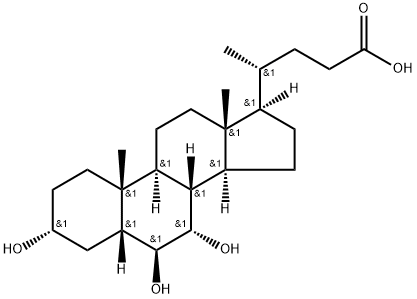
Description
α-Muricholic acid is a murine-specific primary bile acid. Dietary administration of soybean protein decreases fecal levels of α-muricholic acid in mice with high-fat diet-induced obesity which correlates with increases in fecal
Clostridium cluster XIVa, a major producer of secondary bile acids. Plasma, liver, and muscle levels of α-muricholic acid are increased in mice switched from a high-fat to low-fat diet.
Uses
α-Muricholic Acid is an bile acid found in urine. Studies have linked α-Muricholic in the understanding of the complex signaling pathways of hepatic lipid abnormalities with type 2 diabetes and a treatment target for this condition.
Definition
ChEBI: Alpha-muricholic acid is a member of the class of muricholic acids in which the hydroxy groups at positions 6 and 7 have beta- and alpha- configuration respectively. It is a member of muricholic acids, a 6beta-hydroxy steroid and a 7alpha-hydroxy steroid. It is a conjugate acid of an alpha-muricholate.
in vivo
Sulfated and non-sulfated bile acids are determined in the intestines and in the feces of 7-month-old germ-free and conventional male mice. The major bile acids from germ-free mice are cholic acid, α-Muricholic acid and β-Muricholic acid[1].
In the context of primary bile acid, α-Muricholic acid is greatly reduced in high-fat diet (HFD)-soybean protein isolate (SPI) mice compared to the HFD controls[2].
References
[1] HENDRIK J. EYSSEN Jan A M Guido G PARMENTIER. Sulfated Bile Acids in Germ-Free and Conventional Mice[J]. The FEBS journal, 1976, 66 3: 507-514. DOI:
10.1111/j.1432-1033.1976.tb10576.x[2] TETSUYA UEHARA. c-Jun N-terminal kinase mediates hepatic injury after rat liver transplantation.[J]. Transplantation, 2004, 78 3: 324-332. DOI:
10.1097/01.tp.0000128859.42696.28[3] KEITA WATANABE. Dietary soybean protein ameliorates high-fat diet-induced obesity by modifying the gut microbiota-dependent biotransformation of bile acids.[J]. ACS Applied Bio Materials, 2018: e0202083. DOI:
10.1371/journal.pone.0202083[4] MICHAEL R. LA FRANO . Diet-induced obesity and weight loss alter bile acid concentrations and bile acid–sensitive gene expression in insulin target tissues of C57BL/6J mice[J]. Nutrition Research, 2017, 46: Pages 11-21. DOI:
10.1016/j.nutres.2017.07.006