Synthesis
2-Amino-6-methoxybenzoic acid (2.01 g) was dissolved in a mixed solution of acetic acid, hydrobromic acid (48% H2O), and water. The mixture was cooled in a saturated sodium chloride ice-water bath. While cooling, an aqueous solution of NaNO2 (1 equivalent) was slowly added dropwise to the reaction system. The mixture was then stirred at 0°C for 2.5–3 hours, and the resulting diazonium salt was cooled at 0°C. A solution of cuprous bromide (1 equivalent) in HBr (48% H2O, 0.5 mL per mmol CuBr) was added at room temperature. The mixture was stirred at 65°C for 2.5–3 hours. The mixture was diluted with water, and the reaction mixture was extracted three times with ethyl acetate. The organic layer was washed several times with brine and separated. The organic layer was dried with anhydrous sodium sulfate, and the sodium sulfate solid was removed by filtration. The filtrate was concentrated under vacuum to remove the solvent, yielding the target molecule, 2-bromo-6-methylbenzoic acid.
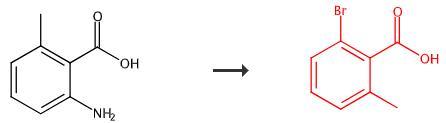
Figure 2. Synthetic route of bromo-6-methylbenzoic acid
Uses
2-Bromo-6-methylbenzoic acid belongs to the benzoic acid derivatives and is mainly used as an intermediate in organic synthesis and pharmaceutical chemistry. It can be used to prepare preservatives, dyes, bactericides, and fragrances.
Description
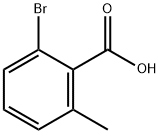
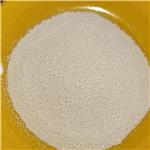
2-Bromo-6-methylbenzoic acid is a fine white powder used as an intermediate in synthesizing pharmaceuticals, agrochemicals, and dyes. It can also be used as a building block for organic compounds in academic research. The product should be stored in a cool, dry place away from heat or ignition sources.
Chemical Properties
2-Bromo-6-methylbenzoic acid is solid at room temperature and pressure. In organic synthetic transformations, the bromine atom in position 2 of the benzene ring can be converted to an aryl or alkyl group by Suzuki coupling or to a boron unit by boronization. The carboxyl group in the structure can be converted to a hydroxyl group by reduction of borane and to an ester group under acidic or basic conditions.