Synthesis
Step 1: Add sodium nitromalondialdehyde monohydrate (2) (13.0 g, 0.1 mol) in H2O (100 mL) to a solution of 5-aminotetrazole monohydrate (10.9 g, 0.1 mol) in 2 N HCl (70 mL). Stir the reaction mixture for 30 minutes. Filter out the precipitated solid, wash with water and air dry. Volume 11.7 g (63%), yellow powder. Melting point 125-130°C (decomposes).
Step 2: Reflux a solution of compound 4 (7.70 g, 42 mmol) in PhMe (50 mL) for 30 minutes using a Dean-Stark trap. Evaporate the solvent under reduced pressure; the oily product crystallizes upon cooling, suitable for further synthesis without purification. Yield 6.25 g (90%), pale yellow crystals. Melting point 56-58°C.
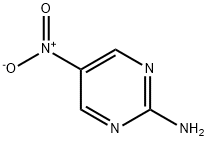
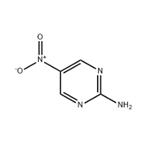
Analytical grade azide 6 was obtained by sublimation of the crude product at 130–150°C (5 mm Hg). Step 3: Azide 6 (0.083 g, 0.5 mmol) was dissolved in MeCN (3 ml), and ammonia was allowed to flow through the solution for 5 minutes. The reaction mixture was kept at room temperature overnight. The precipitated solid was filtered off and then recrystallized from water. Yield: 0.043 g (61%), colorless crystals, 2-amino-5-nitropyrimidine.
Application
2-Amino-5-nitropyrimidine was first discovered in extremophilic bacteria. As a compatible solute that regulates cellular osmotic pressure, it helps microorganisms adapt to harsh environments such as high salt content. Therefore, 2-amino-5-nitropyrimidine shows broad commercial application prospects in many fields such as bioprotection, biomedicine, and biotechnology.