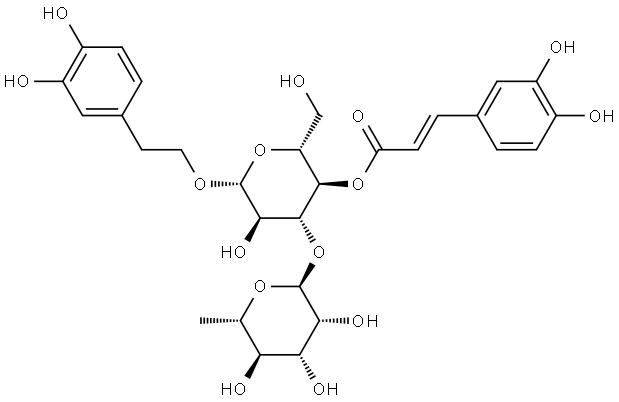
Chemical Properties
White solid
Uses
Verbascoside is an agent producing effects on anti-GBM nephritis in rats. Effective agent against glomerulonephritis. Phenolic anti-oxidant agent.
Definition
ChEBI: Acteoside is a glycoside that is the alpha-L-rhamnosyl-(1->3)-beta-D-glucoside of hydroxytyrosol in which the hydroxy group at position 4 of the glucopyranosyl moiety has undergone esterification by formal condensation with trans-caffeic acid. It has a role as a neuroprotective agent, an antileishmanial agent, an anti-inflammatory agent, a plant metabolite and an antibacterial agent. It is a cinnamate ester, a disaccharide derivative, a member of catechols, a polyphenol and a glycoside. It is functionally related to a hydroxytyrosol and a trans-caffeic acid.
Biological Activity
Verbascoside has anti-inflammatory and photoprotective properties. It has shown neuroprotective effects on PC12 neuronal cells against neurotoxicity. Verbascoside is proven to be a potent inhibitor of xanthine oxidase (XOD) in in vitro studies.''Phenylethanoid glycoside. Antioxidant and antiproliferative.
Synthesis
Method of extracting ergosterol from cinnamon flower, comprising the steps of:
S1. grinding osmanthus flowers into powder;
S2. extracting with a cord extractor;
S3. extracting and concentrating the crude extract of cinnamon obtained from step S2, prefer
Enzyme inhibitor
This plant glycoside and antioxidant (FW = 624.60 g/mol; CAS 61276-173), also known as verbascoside, inhibits TNFa-mediated apoptosis in LPSstimulated macrophages as well as 1-methyl-4-phenylpyridiniuminduced apoptosis in cerebellar granule neurons. It also inhibits proliferation of human promyelocytic HL-60 leukemia cells by inducing cell cycle arrest at the G0/G1 phase, followed by differentiation into monocytes. Acteoside inhibits PMA-induced invasion and migration of human fibrosarcoma cells by Ca2+-dependent CaMK/ERK and JNK/NFκB-signaling pathways. Acteoside thus shows the potential as antimetastatic agent. Another intriguing finding is that acteoside inhibits amyloid-β aggregation. Target(s): aldose reductase; protein kinase C; integrase, HIV-1; peptidyl-dipeptidase A, or angiotensin-converting enzyme; tyrosinase, or monophenol monooxygenase; 5-lipoxygenase, or arachidonate 5-lipoxygenase.