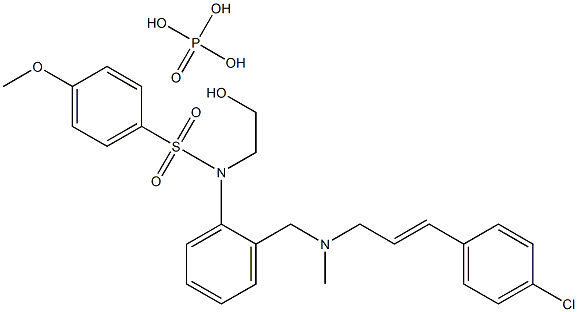
[1] MARIKO SUMI . The newly synthesized selective Ca2+calmodulin dependent protein kinase II inhibitor KN-93 reduces dopamine contents in PC12h cells[J]. Biochemical and biophysical research communications, 1991, 181 3: Pages 968-975. DOI:
10.1016/0006-291x(91)92031-e[2] N. MAMIYA. Inhibition of Acid Secretion in Gastric Parietal Cells by the Ca2+/ Calmodulin-Dependent Protein Kinase II Inhibitor KN-93.[J]. Japanese journal of pharmacology, 1994, 10 2 1: 90. DOI:
10.1016/s0021-5198(19)50001-4[3] SAMAN REZAZADEH D F Thomas W Claydon. KN-93 (2-[N-(2-hydroxyethyl)]-N-(4-methoxybenzenesulfonyl)]amino-N-(4-chlorocinnamyl)-N-methylbenzylamine), a calcium/calmodulin-dependent protein kinase II inhibitor, is a direct extracellular blocker of voltage-gated potassium channels.[J]. Journal of Pharmacology and Experimental Therapeutics, 2006, 317 1: 292-299. DOI:
10.1124/jpet.105.097618[4] EMILY A OESTREICH. Epac and phospholipase Cepsilon regulate Ca2+ release in the heart by activation of protein kinase Cepsilon and calcium-calmodulin kinase II.[J]. The Journal of Biological Chemistry, 2009, 284 3: 1514-1522. DOI:
10.1074/jbc.m806994200[5] NICOLAS FLAMAND. Phosphorylation of serine 271 on 5-lipoxygenase and its role in nuclear export.[J]. Mobilities, 2009, 12 1: 306-313. DOI:
10.1074/jbc.m805593200[6] C RIGANTI. Artemisinin induces doxorubicin resistance in human colon cancer cells via calcium-dependent activation of HIF-1α and P-glycoprotein overexpression[J]. British Journal of Pharmacology, 2009, 156 7: 1054-1066. DOI:
10.1111/j.1476-5381.2009.00117.x