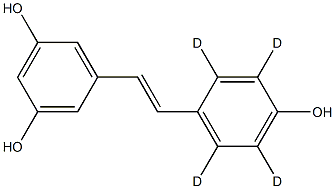
Description
trans-Resveratrol-d4 is intended for use as an internal standard for the quantification of trans-resveratrol by GC- or LC-MS. trans-Resveratrol is a polyphenolic phytoalexin found in a variety of plants, including grapes, that has anti-inflammatory, antioxidant, and anticancer activities. It inhibits the cyclooxygenase and hydroperoxidase activities of COX-1 (EC50s = 15 and 3.7 μM, respectively), but not COX-2 (EC50s = >100 μM and 85 μM, respectively). trans-Resveratrol (3 and 8 mg/kg) inhibits carrageenan-induced paw edema in mice. It inhibits free radical formation in HL-60 human promyelocytic leukemia cells induced by phorbol 12-myristate 13-acetate (TPA; ; EC50 = 27 μM). trans-Resveratrol (1-25 μmol) reduces both the incidence and number of tumors in a two-stage mouse model of skin cancer induced by TPA and 7,12-dimethyl-benz[a]anthracene (DMBA). trans-Resveratrol (200 μM) also activates sirtuin 1 (SIRT1) by 8-fold in vitro and inhibits a variety of targets including ERK1, JNK1, Src, PKCα, aromatase/CYP19, and DNA polymerases α and δ (IC50s = 37, 50, 20, <10, 25, 3.3, and 5 μM, respectively) in vitro and/or ex vivo. It prolongs lifespan in model organisms including C. elegans, D. melanogaster, and mice.
Uses
Resveratrol-d4 is labelled Resveratrol (R150000) which is a minor constituent of wine, correlated with serum lipid reduction and inhibition of platelet aggregation. Resveratrol is a specific inhibitor of COX-1, and it also inhibits the hydroperoxidase activity of COX-1. It has been shown to inhibit events associated with tumor initiation, promotion and progression.
References
[1] MEISHIANG JANG. Cancer Chemopreventive Activity of Resveratrol, a Natural Product Derived from Grapes[J]. Science, 1997, 275 5297. DOI:
10.1126/science.275.5297.218[2] LUCIANO PIROLA Sara F. Resveratrol: one molecule, many targets.[J]. IUBMB Life, 2008, 60 5: 323-332. DOI:
10.1002/iub.47[3] MARGIE T BORRA John M D Brian C Smith. Mechanism of human SIRT1 activation by resveratrol.[J]. The Journal of Biological Chemistry, 2005, 280 17: 17187-17195. DOI:
10.1074/jbc.m501250200