General Description
Odorless white crystalline solid. Bitter taste. pH (saturated aqueous solution) about 6.
Reactivity Profile
4-HYDROXYACETANILIDE(103-90-2) is sensitive to light. Incompatible with strong oxidizers. .
Air & Water Reactions
Slightly soluble in water.
Fire Hazard
Flash point data for this chemical are not available; however, 4-HYDROXYACETANILIDE is probably combustible.
Description
Acetaminophen differs from the nonsteroidal anti-inflammatory agents described in that it
is devoid of anti-inflammatory and antirheumatic properties. It was recently shown that
acetaminophen, like aspirin, inhibits cyclooxygenase action in the brain and is even
stronger than aspirin. On the other hand, the mechanism of analgesic action of acetamin�ophen is not fully clear, since it acts poorly on peripheral cyclooxygenase.
Chemical Properties
White Solid
Originator
Trigesic ,Squibb ,US ,1950
History
Acetaminophen was first discovered by H. N. Morse in 1878. Although many studies on its use as an analgesic were performed, it wasn’t until 1950 that it was marketed under the name Triagesic. Today, its most common trade names are Tylenol and Panadol, but a large percentage of its sales are as a generic drug. It is the most commonly used medication for pain and fever in both the United States and Europe. It is on the World Health Organization's List of Essential Medicines.
Uses
Acetaminophen is widely used as an analgesic and fever-reducing agent. Acetaminophen is
designed for moderate analgesia. It is also effective like aspirin and is used in analgesia for
headaches (from weak to moderate pain), myalgia, arthralgia, chronic pain, for oncological and
post-operational pain, etc.
Uses
Analgesic; antipyretic
Uses
dispersing agent in liquid scintillation counting
Uses
manufacture of azo dyes, photographic chemicals.
Definition
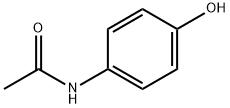
ChEBI: Paracetamol is a member of the class of phenols that is 4-aminophenol in which one of the hydrogens attached to the amino group has been replaced by an acetyl group. It has a role as a cyclooxygenase 2 inhibitor, a cyclooxygenase 1 inhibitor, a non-narcotic analgesic, an antipyretic, a non-steroidal anti-inflammatory drug, a cyclooxygenase 3 inhibitor, a xenobiotic, an environmental contaminant, a human blood serum metabolite, a hepatotoxic agent, a ferroptosis inducer and a geroprotector. It is a member of phenols and a member of acetamides. It is functionally related to a 4-aminophenol.
Indications
Acetaminophen (Tylenol) is an effective antipyretic and
analgesic that is well tolerated at therapeutic doses. It
has only weak antiinflammatory activity; thus, it is not
useful in the treatment of rheumatoid arthritis and
other inflammatory conditions.
Manufacturing Process
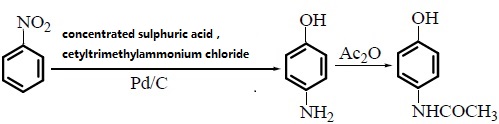
About 250 ml of a reaction mixture obtained by the electrolytic reduction of
nitrobenzene in sulfuric acid solution and containing about 23 grams of paminophenol
by assay is neutralized while at a temperature of 60°C to 65°C,
to a pH of 4.5 with calcium carbonate. The calcium sulfate precipitate which
forms is filtered off, the precipitate washed with hot water at about 65°C and
the filtrate and wash water then combined. The solution is then extracted
twice with 25 ml portions of benzene and the aqueous phase is treated with
0.5 part by weight, for each part of p-aminophenol present, of activated
carbon and the latter filtered off. The activated carbon is regenerated by
treatment with hot dilute caustic followed by a hot dilute acid wash, and
reused a minimum of three times.
To the filtrate obtained, there are then added about 0.2 gram of sodium
hydrosulfite or sodium sulfite and 15.0 grams of anhydrous sodium acetate in
about 27 grams of acetic anhydride at 40°C. The reaction mixture formed is
cooled to 8°C to 10°C with stirring and held at this temperature for 60
minutes. A crystalline precipitate of about 27 grams of N-acetyl-paminophenol
is obtained melting at 169-171°C. This is equivalent to a yield of
85%.
In lieu of utilizing calcium carbonate as the neutralizing agent, calcium
hydroxide, barium hydroxide, barium chloride or other alkaline earth metal
salt or hydroxide forming an insoluble sulfate may be employed.
Brand name
Acephen (G & W);
Infants’ Feverall (Actavis); Injectapap (Ortho-McNeil);
Neopap (Polymedica); Tylenol (McNeil);Anacin;Crocin.
Therapeutic Function
Analgesic, Antipyretic
World Health Organization (WHO)
Paracetamol, a widely used analgesic and antipyretic is known, in
case of overdose, to cause liver damage, frequently with fatal outcome. In
recommended dosages this risk does not occur. Paracetamol is listed in the WHO
Model List of Essential Drugs.
Flammability and Explosibility
Nonflammable
Biological Activity
Cyclooxygenase inhibitor; may be selective for COX-3 (IC 50 values are 460, > 1000 and > 1000 μ M for canine COX-3, and murine COX-1 and COX-2 respectively). Widely used analgesic and antipyretic agent.
Mechanism of action
The mechanism of action of paracetamol is not well understood, but it may
act in a similar fashion to NSAIDs, with inhibition of cyclo-oxygenase
enzymes COX-1 and COX-2 to reduce the phenoxyl radical
formation required for COX-1 and 2 activity and prostaglandin synthesis. I t
has selectivity for inhibition of prostaglandin synthesis with low
concentrations of peroxidases and arachidonic acid, but limited effect at
higher concentrations and, therefore, has limited anti-inflammatory effects.
Unlike opioids, paracetamol has no well-defined endogenous binding sites.
I n some circumstances, it may exhibit a preferential effect on COX-2
inhibition. There is growing evidence of a central antinociceptive effect of
paracetamol. It has also been found to prevent prostaglandin production at
the cellular transcriptional concentration, independent of COX activity.
Clinical Use
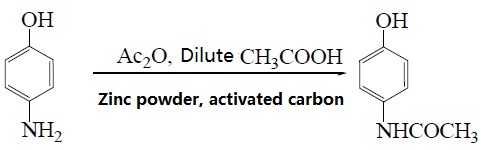
Acetaminophen is weakly acidic (pKa = 9.51) and synthesized by the acetylation of p-aminophenol. It is weakly bound
to plasma proteins (18–25%). Acetaminophen is indicated for use as an antipyretic/analgetic, particularly in those
individuals displaying an allergy or sensitivity to aspirin. It does not possess anti-inflammatory activity, but it will
produce analgesia in a wide variety of arthritic and musculoskeletal disorders. It is available in various formulations,
including suppositories, tablets, capsules, granules, and solutions. The usual adult dose is 325 to 650 mg every 4 to
6 hours. Doses of greater than 2.6 g/day are not recommended for long-term therapy because of potential
hepatotoxicity issues. Acetaminophen, unlike aspirin, is stable in aqueous solution, making liquid formulations readily
available, a particular advantage in pediatric cases.
Side effects
Side effects are rare and may include hematological reactions, leucopenia, agranulocytosis and other hypersensitivity reactions. Paracetamol has a narrowtherapeutic dose range and overdosage induces severe liver and renal damage via accumulation of a toxic metabolite, N-acetylbenzoquinoneimine (NABQI). Acetylcysteine or methionine, which increase glutathione conjugation of the metabolite, are used as antidote.
Synthesis
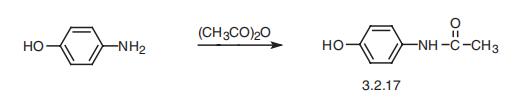
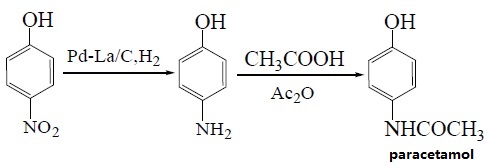
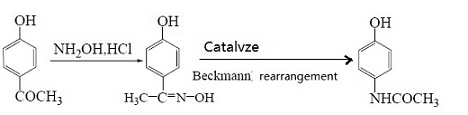
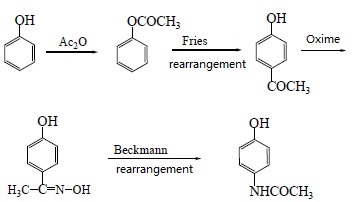
Acetaminophen, p-acetaminophenol (3.2.80), is synthesized by reacting
p-aminophenol with acetic anhydride [76,77].
Environmental Fate
Although a major part of the ingested dose of acetaminophen is
detoxified, a very small proportion is metabolized via the
cytochrome P450-mixed function oxidase pathway to a highly
reactive n-acetyl-p-benzoquinoneimine (NAPQI). The toxic
intermediate NAPQI is normally detoxified by endogenous
glutathione to cysteine and mercapturic acid conjugates and
excreted in the urine. Recent studies have shown that hepatic
P450s, CYP2E1, and to a lesser extent CYP1A2 are responsible
for conversion of acetaminophen to NAPQI. In acetaminophen
overdose, the amount of NAPQI increases and depletes
endogenous glutathione stores. Time course studies have
shown that covalent binding of reactive NAPQI and subsequent
toxicity occur only after cellular glutathione stores are
reduced by 70% or more of normal. Mitochondrial dysfunction
and damage can be seen as early as 15 min after a toxic dose in
mice, suggesting that this may be a critical to cellular necrosis.
The NAPQI is then thought to covalently bind to critical
cellular macromolecules in hepatocytes and cause cell death.
Recent proteomic studies have identified at least 20 known
proteins that are covalently modified by the reactive acetaminophen
metabolite. The resulting acetaminophen-cysteine
(APAP-CYS) protein adducts can be quantified via a highpressure
liquid chromatography coupled with electrochemical
detection (HPLC-EC). Hepatic necrosis and inflammation
develop as a consequence of hepatocellular death, which
results in development of clinical and laboratory findings
consistent with liver failure. A similar mechanism is postulated
for the renal damage that occurs in some patients following
acetaminophen toxicity.
Metabolic pathway
Acetaminophen (APAP) is metabolized by mice, and
nine metabolites are identified in the urine. The main
metabolites are APAP-glucuronide and 3-cysteinyl-
APAP. Hydroquinone metabolites of S-(2,5-
dihydroxyphenyl)cysteine and S-(2,5-dihydroxyphenyl)-
N-acetylcysteine result from the benzoquinone
metabolite of APAP.
Metabolism
acetaminophen is undergoes rapid first-pass metabolism in the GI tract primarily by conjugation reactions, with the
O-sulfate conjugate being the primary metabolite in children and the O-glucuronide being the primary metabolite in
adults. A minor, but significant, product of both acetaminophen and phenacetin is the N-hydroxyamide produced by a
CYP2E1 and CYP3A4.
storage
Store at RT,unstable in solution, ready to use.
Purification Methods
Recrystallise Paracetamol from water or EtOH. The 3,5-dinitrobenzamide complex gives orange crystals from hot H2O and has m 171.5o. [Beilstein 13 H 460, 13 I 159, 13 II 243, 13 III 1056, 13 IV 1091.]
References
[1] RALPH VINEGAR Jeffrey L S James F Truax. Quantitative comparison of the analgesic and anti-inflammatory activities of aspirin, phenacetin and acetaminophen in rodents[J]. European journal of pharmacology, 1976, 37 1: Pages 23-30. DOI:
10.1016/0014-2999(76)90004-2[2] SHINSAKU KOBAYASHI HIROMU T. FEVER RESPONSES TO BACTERIAL PYROGENS IN GUINEA PIGS AND APPLICATION FOR SCREENING OF ANTIPYRETIC AGENTS[J]. Japanese journal of pharmacology, 1968, 18 1: Pages 80-85. DOI:
10.1254/jjp.18.80[3] IRA S. LURIE. Determination of heroin and basic impurities for drug profiling by ultra-high-pressure liquid chromatography[J]. Forensic science international, 2013, 231 1: Pages 300-305. DOI:
10.1016/j.forsciint.2013.06.008[4] MD D S B, MPH Alexander E C M Maribeth C Lovegrove MPH, MPH. Emergency Department Visits for Overdoses of Acetaminophen-Containing Products[J]. American Journal of Preventive Medicine, 2011, 40 6: Pages 585-592. DOI:
10.1016/j.amepre.2011.02.026[5] J A MITCHELL. Selectivity of nonsteroidal antiinflammatory drugs as inhibitors of constitutive and inducible cyclooxygenase.[J]. Proceedings of the National Academy of Sciences of the United States of America, 1993, 90 24: 11693-11697. DOI:
10.1073/pnas.90.24.11693[6] T D WARNER. Nonsteroid drug selectivities for cyclo-oxygenase-1 rather than cyclo-oxygenase-2 are associated with human gastrointestinal toxicity: a full in vitro analysis.[J]. Proceedings of the National Academy of Sciences of the United States of America, 1999, 96 13: 7563-7568. DOI:
10.1073/pnas.96.13.7563[7] BURKHARD HINZ Kay B Olga Cheremina. Acetaminophen (paracetamol) is a selective cyclooxygenase-2 inhibitor in man[J]. FASEB Journal, 2007, 22 2: 383-390. DOI:
10.1096/fj.07-8506com[8] HINSON J A. Reactive metabolites of phenacetin and acetaminophen: a review.[J]. Environmental Health Perspectives, 1983, 49: 71-79. DOI:
10.1289/ehp.834971[9] EDWARD D H?GEST?TT. Conversion of acetaminophen to the bioactive N-acylphenolamine AM404 via fatty acid amide hydrolase-dependent arachidonic acid conjugation in the nervous system.[J]. The Journal of Biological Chemistry, 2005, 280 36: 31405-31412. DOI:
10.1074/jbc.m501489200[10] DERICK HAN. Regulation of drug-induced liver injury by signal transduction pathways: critical role of mitochondria.[J]. Trends in pharmacological sciences, 2013, 34 4: 243-253. DOI:
10.1016/j.tips.2013.01.009[11] M. TIRMENSTEIN S D N. Acetaminophen-induced oxidation of protein thiols. Contribution of impaired thiol-metabolizing enzymes and the breakdown of adenine nucleotides.[J]. The Journal of Biological Chemistry, 1990, 138 3: 3059-3065. DOI:
10.1016/s0021-9258(19)39733-9[12] TAMáS L?RINCZ. Ferroptosis is Involved in Acetaminophen Induced Cell Death.[J]. Pathology & Oncology Research, 2015, 21 4: 1115-1121. DOI:
10.1007/s12253-015-9946-3


 ;
;