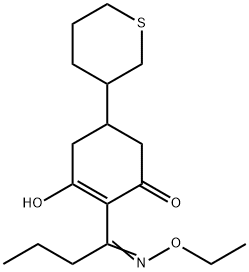
Description
Cycloxydim is a systemic herbicide. It is moderately soluble in aqueous solution, is unlikely to leach to groundwater and is relatively volatile. It is not persistent in soils and is unlikely to persist in aquatic systems due to rapid aqueous photolysis. It has a low mammalian toxicity and, whilst the chemical properties suggest it may bioaccumulate, that does not appear to happen in practice. It is a skin and eye irritant. It is moderately toxic to birds, honeybees, earthworms and aquatic invertebrates. However, its is not particularly toxic to fish or other aquatic organisms.
Uses
Cycloxydim is a cyclohexene oxime herbicide that is used for the control of grass weeds of many agricultural and horticultural broad-leaved crops.
Definition
ChEBI: A beta-diketone that is cyclohexa-1,3-dione which is substituted at position 2 by an N-ethoxybutanimidoyl group and at position 5 by a tetrahydro-2H-thiopyran-3-yl group. A systemic herbicide effective
against grasses, it is used in the cultivation of a variety of crops, including oil seed rape and potatoes.
Production Methods
Cycloxydim is commercially produced through a multi-step organic synthesis. The process typically begins with the preparation of a cyclohexenone intermediate, which is then functionalised through a series of reactions including sulfonylation and oxime formation to introduce the key oxime ether moiety that characterises cycloxydim. The synthesis involves careful control of stereochemistry and reaction conditions to ensure the production of the biologically active isomer.
Mechanism of action
Selective, systemic, absorbed by foliage. Acetyl CoA carboxylase inhibitor (ACCase) - distrupts fatty acid biosynthesis and lipid formation.
Metabolic pathway
Cycloxydim is rapidly metabolized in soybean plants,
and four series of different types of metabolite in either
free or conjugated form are identified. Transformation
products are formed by chemical and/or enzymatic
reactions involving a range of oxidation, a
rearrangement, and cleavage of the cyclohexanone
ring or ethoxyimino side chain.