Production Methods
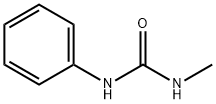
Defenuron would have been manufactured using the same straightforward industrial chemistry applied to other mono substituted ureas. Commercial production began with aniline, which was reacted with methyl isocyanate or, in older processes, methylcarbamoyl chloride, to form the N methyl N′ phenylurea structure. The MIC route, widely used across the carbamate and urea pesticide industry, required strictly anhydrous conditions, inert gas blanketing, and careful temperature control because the reaction is highly exothermic. After completion, the crude product was subjected to aqueous neutralisation, filtration, solvent exchange, and drying, yielding technical grade defenuron.