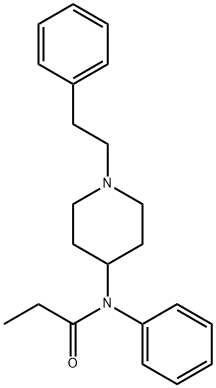
Fentanyl is available in a variety of preparations for parenteral, transdermal
and transmucosal (including buccal) administration. Because of high firstpass
metabolism (~70%) it is not given orally. It is approximately 80–100
times more potent than morphine in the acute seing, although it is
approximately 30–40 times as potent when given chronically (e.g. slowrelease
transdermal patches). With transdermal administration, the patch
and underlying dermis act as a reservoir, and plasma concentration does not
reach steady state until approximately 15h after initial application. Plasma
concentration also declines slowly after removal (t1/2 ~15–20 h).
Fentanyl is very lipophilic, with a relatively short duration of action. There
are several new buccal/transmucosal preparations developed for rapid-onset
breakthrough pain. These aim to have a very rapid onset in approximately
10min, although this may not be the case in clinical practice. Fentanyl has a
large VD with rapid peripheral tissue uptake, limiting initial hepatic
metabolism. This may result in significant variability in plasma
concentrations and secondary plasma peaks. It binds to αl-acid glycoprotein
and albumin; 40% of the protein-bound fraction is taken up by erythrocytes.
The lungs may be important in exerting a first-pass effect on fentanyl (up to
75% of the dose), thus buffering the plasma from high peak drug
concentrations.