Sitagliptin vs. Linagliptin
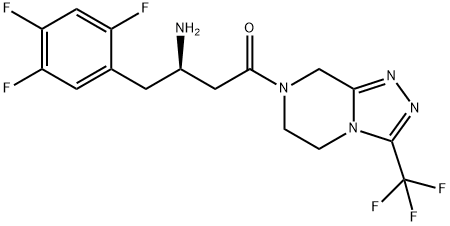
Sitagliptin (CAS 486460-32-6) and Linagliptin (CAS 668270-12-0) are both oral antidiabetic drugs belonging to the DPP-4 inhibitor class, used to treat type 2 diabetes mellitus (T2DM) in adults. Both received approval from the U.S. Food and Drug Administration (FDA)—Sitagliptin in 2006 and Linagliptin in 2011. Their glucose-lowering efficacy is comparable, and both are significantly superior to placebo. For most patients with normal renal function, the choice between them depends primarily on drug availability and cost; however, for patients with renal impairment, Linagliptin is the preferred choice due to its non-renal clearance metabolic profile [1-2].

Mechanism of Action
Sitagliptin and Linagliptin share an identical mechanism of action. DPP-4 inhibitors enhance glucose-dependent insulin secretion by inhibiting the enzymatic degradation of incretins (glucagon-like peptide-1 and glucose-dependent insulinotropic polypeptide).
Clinical Efficacy
According to multiple network meta-analyses, there are no significant clinical differences between Sitagliptin (100 mg/day) and Linagliptin (5 mg/day) regarding reductions in glycated hemoglobin (HbA1c), fasting plasma glucose, 2-hour postprandial glucose, and body weight; their therapeutic effects are essentially equivalent. The proportion of patients achieving glycemic control targets (e.g., HbA1c < 7%) is also similar.
Side Effects
Both Sitagliptin and Linagliptin carry a low risk of hypoglycemia and demonstrate safety profiles similar to placebo regarding cardiovascular outcomes and the risk of pancreatitis, with no clear evidence of differentiation. Based on absolute incidence data, Linagliptin shows numerically lower rates of gastrointestinal adverse events and infection risks.
The primary difference between the two lies in their pharmacokinetic properties. Linagliptin's non-renal clearance pathway allows for safe use in patients with renal impairment (ranging from mild to severe) without the need for dose adjustment, whereas Sitagliptin requires dosage adjustments based on the level of renal function. Therefore, for patients with type 2 diabetes mellitus (T2DM) and concomitant renal impairment, linagliptin offers clear advantages and broader applicability compared with sitagliptin.
References
[1] LONGZHOU LI. Comparison and Evaluation of Efficacy and Safety of Sitagliptin and Linagliptin in Adults With Type 2 Diabetes Mellitus: A Bayesian Network Meta-Analysis.[J]. Journal of Evidence‐Based Medicine, 2026, 19 1: e70128. DOI:10.1111/jebm.70128.
[2] KHOSRO KESHAVARZ. Linagliptin versus sitagliptin in patients with type 2 diabetes mellitus: a network meta-analysis of randomized clinical trials.[J]. Daru : journal of Faculty of Pharmacy, Tehran University of Medical Sciences, 2017, 25 1: 23. DOI:10.1186/s40199-017-0189-6.
You may like
Related articles And Qustion
See also


Lastest Price from Sitagliptin manufacturers

2026-06-26
- CAS:
- 486460-32-6
- Min. Order:
- 1KG
- Purity:
- 99%
- Supply Ability:
- 1000kgs

$1.002025-11-05
- CAS:
- 486460-32-6
- Min. Order:
- 10g
- Purity:
- 99
- Supply Ability:
- 999