Monocaprylin Antimicrobial Performance
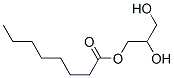
Monocaprylin is a nonionic surfactant belonging to the glycerol monostearate class. It is produced through an esterification reaction between glycerol and caprylic acid. Its molecule contains both hydrophilic and lipophilic groups, giving it good emulsifying properties. It also exhibits broad-spectrum antimicrobial activity, effectively inhibiting both bacteria and mold. It is commonly used as a food preservative and emulsifier in foods such as pastries, meat products, and beverages.

Monocaprylin Inactivates Pathogens on Alfalfa Seeds
Non-esterified fatty acids and their monoglycerides are effective against a wide spectrum of pathogens including bacteria, enveloped viruses, and parasites. Although considerable data is available on the antimicrobial properties of fatty acids, most research has focused on either short chain (containing 6 carbons or less) or long chain (containing more than 10 carbons) fatty acids. Caprylic acid (octanoic acid) is an eight carbon fatty acid naturally present in human breast milk, bovine milk, and coconut oil, and approved by the FDA under CFR 184.1025 as generally recognized as safe (GRAS) for use in food processing. Caprylic acid and its monoglycerol, monocaprylin, were found to inactivate infant pathogens respiratory syncytial virus (RSV), herpes simplex virus type 1 (HSV-1), Haemophilus influenzae, Group B streptococcus, and major bovine mastitis pathogens, and others. The effectiveness of caprylic acid and monocaprylin against foodborne pathogens E. coli O157:H7, L. monocytogenes, Cronobacter sakazakii, and Bacillus cereus in milk has also been reported. Despite the extensive research on decontamination of sprout seeds, no chemical sanitizer has been effective in eliminating E. coli O157:H7 or Salmonella spp. from the surfaces of the sprout seeds. The objective of the current study was to evaluate the potential use of caprylic acid and monocaprylin as alternative sanitizers for reducing the E. coli O157:H7 and Salmonella spp. populations on alfalfa seeds for sprout manufacture.[1]
The potential use of caprylic acid and monocaprylin for reducing E. coli O157:H7 and Salmonella spp. populations on alfalfa seeds was evaluated. The effectiveness of three concentrations of CA and MC (25, 50, and 75 mM) to reduce E. coli O157:H7 and Salmonella spp. populations in 0.1% peptone water and on alfalfa seeds was evaluated. Surviving populations of E. coli O157:H7 and Salmonella spp. were enumerated by direct plating on tryptic soy agar (TSA). Non-inoculated alfalfa seeds were soaked for up to 120 min to evaluate the effect of CA and MC solutions on seed germination rate. For planktonic cells, the efficacy of the treatments was: 75 MC > 50 MC > 25 MC > 75 CA > 50 CA > 25 CA. Both E. coli O157:H7 and Salmonella spp. were reduced to below the detection limit (0.6 log CFU/ml) within 10 min of exposure to 75 monocaprylin from initial populations of 7.65 ± 0.10 log CFU/ml and 7.71 ± 0.11 log CFU/ml, respectively. Maximum reductions of 1.56 ± 0.25 and 2.56 ± 0.17 log CFU/g for E. coli O157:H7 and Salmonella spp., respectively, were achieved on inoculated alfalfa seeds (from initial populations of 4.74 ± 0.62 log CFU/g and 5.27 ± 0.20 log CFU/g, respectively) when treated with 75 monocaprylin for 90 min. Germination rates of CA or MC treated seeds ranged from 84% to 99%. The germination rates of CA or MC soaked seeds and water soaked seeds (control) were similar (P > 0.05) for soaking times of ≤ 90 min. Monocaprylin (75 mM) can be used to reduce E. coli O157:H7 and Salmonella spp. on alfalfa seeds without compromising seed viability.
Antimicrobial Efficacy of C8 Fatty Acids in Milk
Listeria monocytogenes and Escherichia coli O157:H7 are major foodborne pathogens implicated in various outbreaks involving pasteurized or unpasteurized milk, and various dairy products. The objective of this study was to determine the antibacterial effect of caprylic acid (CA, C8:0) and its monoglyceride, monocaprylin (MC) on L. monocytogenes and E. coli O157:H7 in whole milk. A five-strain mixture of E. coli O157:H7 or L. monocytogenes was inoculated in autoclaved milk (106 CFU/ml) containing 0, 25, or 50 mM of CA or MC. At 37°C, all the treatments, excepting 25 mm CA, reduced the population of both pathogens by approximately 5.0 log CFU/ml in 6 h. At 24 h of storage at 8°C, MC at both levels and CA at 50 mM decreased L. monocytogenes and E. coli O157:H7, respectively by >5.0 log CFU/ml. At 48 h of 4°C storage, populations of L. monocytogenes and E. coli O157:H7 were decreased to below detection level (enrichment negative) by 50 mm of monocaprylin and caprylic acid, respectively. Results indicate that monocaprylin could potentially be used to inhibit L. monocytogenes and E. coli O157:H7 in milk and dairy products, but sensory studies need to be conducted before recommending their use.[2]
References
[1]Chang SS, Redondo-Solano M, Thippareddi H. Inactivation of Escherichia coli O157:H7 and Salmonella spp. on alfalfa seeds by caprylic acid and monocaprylin. Int J Food Microbiol. 2010 Nov 15;144(1):141-6. doi: 10.1016/j.ijfoodmicro.2010.09.011. PMID: 20926150.
[2]Nair, M. K. M., Vasudevan, P., Hoagland, T., & Venkitanarayanan, K. (2004). Inactivation of Escherichia coli O157:H7 and Listeria monocytogenes in milk by caprylic acid and monocaprylin. Food Microbiology, 21(5), 611–616.
You may like
Related articles And Qustion

See also


Lastest Price from MONOCAPRYLIN manufacturers

2026-07-08
- CAS:
- 26402-26-6
- Min. Order:
- 1kg
- Purity:
- 98
- Supply Ability:
- 1000kgs
$10.002025-04-21
- CAS:
- 26402-26-6
- Min. Order:
- 1KG
- Purity:
- 99%
- Supply Ability:
- 100 mt