4,4'-Dithiodimorpholine: Rubber Vulcanization Accelerator
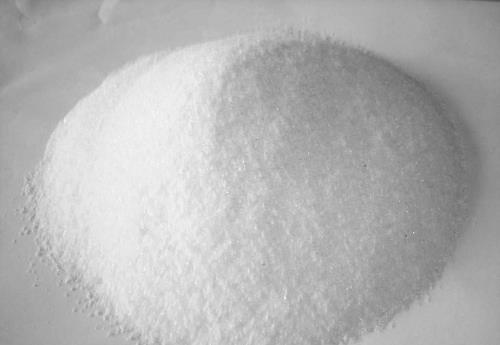
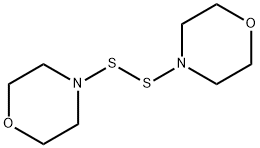
4,4'-Dithiodimorpholine is a white crystalline powder at ambient temperature, with a melting point of approximately 124–128°C. It is slightly soluble in water and readily soluble in organic solvents. As a commonly used vulcanisation accelerator in the rubber industry, it is suitable for the vulcanisation of both natural and synthetic rubbers, enhancing the heat resistance and ageing resistance of rubber products. It is also employed in organic synthesis for constructing sulphide bonds. During handling, exposure to high temperatures and strong oxidising agents should be avoided, and appropriate protective measures must be observed.
Methods of 4,4'-Dithiodimorpholine production
4,4'-Dithiodimorpholine (DTDM) is used as a curing agent during the production of rubber wares, mainly tires. It favors the thermostable vulcanizates formation, increases the resistance of rubber mixtures to the premature curing and allows to reduce the sulphur content necessary for curing by 5–10 times at the simultaneous introduction of sulphenamide. In 1977 in Ukraine the 4,4'-Dithiodimorpholine production was placed into operation. The process main studies were: synthesis, expendable washing of suspension, filtration, granulation, drying and packing. The product yield was 72-75 relative to the theoretically possible one. The production was characterized by DTDM low yield and quality, a great volume of sewages, production irregularity (because it depended upon imported raw material-sulphur monochloride)and high dust content connected with DTDM dispersion after drying. Therefore the problem of DTDM production refinement aimed at the increase of the main product yield, decrease of by-products amount and environmental protection is very urgent. Sulphur monochloride is one of the components for 4,4'-Dithiodimorpholine production. It is obtained as a by-product at methane chlorination to tetra-chlorine carbon and it was not produced in Ukraine.The problems with import result in the increase of main product cost and do not favor the production regularity. Therefore we studied sulphur monochloride synthesis with the aim of its further production at Ukrainian enterprises.[1]
The main factors affecting the DTDM yield and quality are the excess of morpholine (till 0.1 mol) and absence of dissolved oxygen; that is achieved by the reaction mass blowing by nitrogen with the simultaneous introduction of sodium sulphite. Under the mentioned conditions the 4,4'-Dithiodimorpholine yield is 92.5 %, its melting point is 397–398.5 K. The next step was to determine the reasons of DTDM low quality. We analyzed IR-spectra of raw DTDM and DTDM purified by fivefold washing (three times by repulping, then by water with small amount of acetic acid(0.025 %and then by water).The main compounds worsening the 4,4'-Dithiodimorpholine quality are morpholine and morpholine sulphide. These products, in contrast to DTDM, are well-soluble in water; therefore the washing of paste by water improves the main product quality. It should be noted that in accordance with the existing regulations the 4,4'-Dithiodimorpholine paste is washed by water which is directed to the morpholine extraction with further return for the synthesis stage. Thus the great volume of sewages is formed. We suggested to realize the first and second rinses of the paste by water obtained from the third and fourth rinses (so called repulping).The suggestion allows to decrease almost twice the amount of water without the decrease of product quality.
The existing technology for the tires production provides DTDM usage in the form of granules. Sometimes powder-form is needed. 4,4'-Dithiodimorpholine is a high- dispersive powder, therefore the loss at the drying stage and dust content are great that increases the costs for environmental protection. We examined the effect of adhesive additives increasing the surface attractive forces between DTDM particles. Polyethyleneglycols with the molecular mass of 200,400 and 1500,as well as B-400 propynol (oxypropylated butyl alcohol)and neonols (surface-active compounds based on C9-Cio)were used as additives. They decrease 4,4'-Dithiodimorpholine dust formation by 10-20 times, and it is sufficient from the ecological point of view. Hence we chose PEG-200 as the cheapest product produced in Ukraine.PEG-200 was dispersed as 50% solution in water in the vacuum dryer(20 kg of PEG-200 for 1 ton of DTDM). Thus, we realized the changes in the process flowsheet: implementation of sulphur monochloride production; change of process conditions with the increase of morpholine: sulphur monochloride ratio; change of washing conditions including repulping and water; drying by dispersed PEG-200 aqueous solution. All these changes increase the 4,4'-Dithiodimorpholine yield from 75 to 93 %improve its quality, decrease the product cost, almost twice reduce the sewages, extend the 4,4'-Dithiodimorpholine assortment (powdered one without dust formation)and improve the ecological situation.
4,4'-Dithiodimorpholine on ageing properties of SBS-modified asphalts
Asphalt has a wide application in the fields of pavement construction, waterproofing, corrosion protecting because of its good adhesion, waterproof, insulation property and so on, and the most common use is for paving road. Effect of additives 4,4'-Dithiodimorpholine and tetraethylthiuram disulphide on high-temperature storage stabilities and thermal oxidative ageing performance of SBS-modified asphalt were studied. Considering cost and performance, the content and ratio of D:T should be 0.2% and 1:3, respectively, and the result was confirmed by dynamic shear rheological testing of the samples before and after ageing. Mixtures of SBS-modified asphalt with 4,4'-Dithiodimorpholine and tetraethylthiuram disulphide were prepared by physical high-speed shearing. The thin film oven test was used for simulating thermal degradation during short-term ageing. The results show that appropriate content and ratio of additives 4,4'-Dithiodimorpholine and tetraethylthiuram disulphide can improve anti-ageing properties of SBS-modified asphalts; moreover, the advance of high-temperature storage stabilities of the mixture was significant.[2]
References
[1] Vasyl Mezhybrotskyi, L. O., Volodymyr Starchevskyi. (2013). Methods of dithiodimorpholine production. Chemistry and Chemical Technology, 8 1, 213–216.
[2] Runtian Chang, Sujun D., Jinyu Pang. (2016). Effect of dithiodimorpholine and tetraethylthiuram disulphide on ageing properties of SBS-modified asphalts. Road Materials and Pavement Design, 5 1, 243–251.
You may like
See also
Lastest Price from 4,4'-Dithiodimorpholine manufacturers
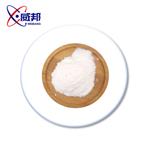
US $10.00/KG2025-04-21
- CAS:
- 103-34-4
- Min. Order:
- 1KG
- Purity:
- 99%
- Supply Ability:
- 10 mt
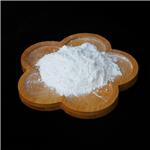
US $0.00-0.00/KG2025-04-15
- CAS:
- 103-34-4
- Min. Order:
- 1KG
- Purity:
- 99%
- Supply Ability:
- 500000kg