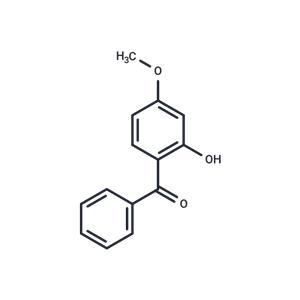
| Name | Oxybenzone |
| Description | Oxybenzone is a UV filter commonly used in tanning and skin protection agents. It is a derivative of benzophenone and is used as an endocrine disrupting chemical that penetrates the placental and blood-brain barriers. It impairs autophagy, alters epigenetic status and disrupts vitamin X-like receptor signaling in apoptotic neuronal cells. |
| Cell Research | Cells are grown at 37℃ with 100% humidity and 10% CO2. Prior to analyses, cells are subcultured onto 24-well plates and allowed to become 70-90% confluent. On day 1 of the experiment, cells are washed three times with serum-free media containing 0.5% bovine serum albumin (BSA), followed by replacement with the same media that also contained 1 ng/ml of IL-1β with or without oxybenzone. After an exposure time of 24 h, the media are removed, the pH adjusted to 3.5 with HCl, and finally assayed for PGE2-production. (Only for Reference) |
| In vitro | A dose-dependent inhibition of PGE2-production is found in the HEPM cell culture following oxybenzone exposure[1]. Benzophenones, including oxybenzone(BP-3) are documented mutagens that increase the rate of damage to DNA, especially when exposed to sunlight. It either can act directly as genotoxicants or become genotoxicants by bioactivation via cytochrome P450 enzymes. Oxybenzone can generate reactive oxygen species, which are potential mutagens, when applied topically to the skin followed by UV light exposure[2]. |
| In vivo | In mice studies, oxybenzone(BP-3) exposure significantly affects fecundity, as well as inducing unexplained mortality in lactating mothers. Studies in both mice and rats demonstrate that generational exposure to oxybenzone(BP-3) reduces body weight, increases liver ([50 %) and kidney weights, induces a 30 % increase in prostate weight, a reduction in immunocompetence, and significantly increases uterine weight in juveniles. In mammals, oxybenzone(BP-3) is renowned for having estrogenic and anti-androgenic activities, causing activation of estrogen receptor proteins and inhibition of androgen receptors[2]. |
| Storage | Powder: -20°C for 3 years | In solvent: -80°C for 1 year
Shipping with blue ice/Shipping at ambient temperature. |
| Solubility Information | 10% DMSO+40% PEG300+5% Tween 80+45% Saline : 2 mg/mL (8.76 mM), Sonication is recommended.
DMSO : 50 mg/mL (219.07 mM), Sonication is recommended.
|
| Keywords | sun | RetinoidReceptor | Retinoid X receptors | Retinoid Receptor | Retinoic acid receptors | RAR/RXR | placental | Oxybenzone | neuronal | Inhibitor | inhibit | filter | cells | blood-brain | Benzophenone-3 | Benzophenone3 | barriers | Autophagy | Apoptosis |
| Inhibitors Related | Stavudine | Aceglutamide | Hemin | Urea | Tamoxifen | Guanidine hydrochloride | Hydroxychloroquine | Metronidazole | Formamide | Paeonol | Naringin | Alginic acid |
| Related Compound Libraries | Nuclear Receptor Compound Library | Bioactive Compound Library | Cancer Cell Differentiation Compound Library | ReFRAME Related Library | CNS-Penetrant Compound Library | Cosmetic Ingredient Compound Library | Bioactive Compounds Library Max | Human Metabolite Library | Transcription Factor-Targeted Compound Library |


 United States


