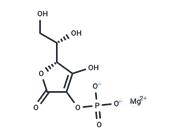
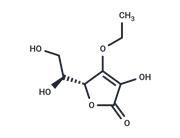
| Name | L-Ascorbic acid |
| Description | L-Ascorbic acid (Vitamin C) is a natural product that is a potent reducing agent and antioxidant. L-Ascorbic acid functions in fighting bacterial infections, in detoxifying reactions, and in the formation of collagen. L-Ascorbic acid is used in the treatment of scurvy. |
| In vitro | METHODS: Human osteosarcoma cells MG-63 were treated with L-Ascorbic acid (62.5-1000 µM) for 3-24 h. Cell viability was measured by XTT Assay.
RESULTS: Cell viability was consistently >95% when cells were treated with L-Ascorbic acid at concentrations of 0-250 µM. When higher concentrations were used, a dose-dependent decrease in cell viability was observed. [1]
METHODS: Melanoma cells WM1366 were treated with L-Ascorbic acid (5-50 µM) for 24 h. The expression levels of target proteins were measured using Western Blot.
RESULTS: The lowest concentration of L-Ascorbic acid (5 µM) significantly reduced the normoxic expression of HIF-1α protein in human melanoma cell lines. [2] |
| In vivo | METHODS: L-Ascorbic acid (1-4.5 g/kg) was administered intraperitoneally to irradiated C57BL/6 mice to detect radioprotective activity.
RESULTS: Administration of 3 g/kg L-Ascorbic acid immediately after exposure significantly increased the survival rate of mice after 7-8 Gy WBI. However, administration of less than 3 g/kg L-Ascorbic acid was ineffective, and 4 g/kg and above was harmful to mice. [3]
METHODS: To investigate the effects on amnesia, L-Ascorbic acid (60-160 mg/kg) was administered intraperitoneally to diazepam, scopolamine, and aging-induced amnesic Swiss mice once daily for 3-8 days.
RESULTS: L-Ascorbic acid improved learning and memory in aging mice, as evidenced by decreased transfer latency and increased descending latency. [4] |
| Storage | Keep away from direct sunlight,
Powder: -20°C for 3 years | In solvent: -80°C for 1 year
Shipping with blue ice/Shipping at ambient temperature. |
| Solubility Information | H2O : 35.7 mg/mL (202.7 mM), Sonication is recommended.
DMSO : 255 mg/mL (1447.88 mM), Sonication is recommended.
Ethanol : < 1 mg/mL (insoluble or slightly soluble)
|
| Keywords | VC | species | ROS | ReactiveOxygenSpecies | Reactive Oxygen Species | reactive | oxygen | L-Ascorbic acid | LAscorbic acid | L Ascorbic acid | Inhibitor | inhibit | EndogenousMetabolite | Endogenous Metabolite | Electron | donor | deposition | channel | Cav3.2 | cancer | CalciumChannel | Calcium Channel | Ca2+ channels | Ca channels | Apoptosis | antioxidant |
| Inhibitors Related | Sucrose | Aceglutamide | Nicotinamide riboside malate | 2,4,6-Tri-tert-butylphenol | D(+)-Raffinose pentahydrate | Guanidine hydrochloride | Ethyl linoleate | Malic acid | Glycerol | Thymidine | Gluconate Calcium | DL-Lysine |
| Related Compound Libraries | Pain-Related Compound Library | Traditional Chinese Medicine Monomer Library | Anti-Inflammatory Traditional Chinese Medicine Compound Library | Tobacco Monomer Library | Inhibitor Library | FDA-Approved Drug Library | Anti-Cancer Approved Drug Library | Anti-Aging Compound Library | Anti-infective Natural Product Library | Ion Channel Targeted Library | Anti-Cancer Drug Library | Food as Medicine Compound Library |



 United States