Property | Value |
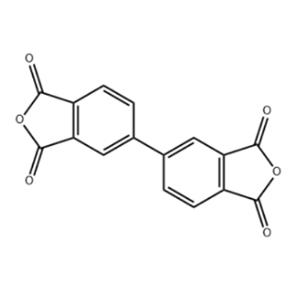
Systematic Name | 3,3',4,4'-Biphenyltetracarboxylic dianhydride |
Common Name | BPDA; 4,4'-Biphthalic Anhydride |
CAS Number | 2420-87-3 |
Molecular Formula | C₁₆H₆O₆ |
Molecular Weight | 294.22 g/mol |
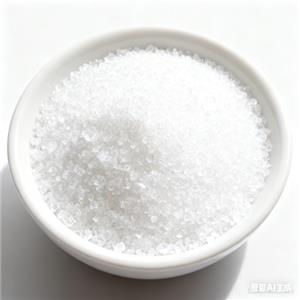
Appearance | White to green to brown powder to crystal; Off-white powder to crystal |
Melting Point | 299-305 °C (lit.); 303 °C |
Boiling Point | 614.9 ± 48.0 °C (Predicted) |
Density | 1.625 ± 0.06 g/cm³ (Predicted) |
Vapor Pressure | 0 Pa at 20 °C |
Solubility | Almost transparent in hot DMF |
Description of 3,3',4,4'-Biphenyltetracarboxylic dianhydride
3,3',4,4'-Biphenyltetracarboxylic dianhydride (BPDA, CAS: 2420-87-3) is a rigid aromatic dianhydride monomer crucial for synthesizing high-performance polyimides. As a building block, BPDA produces colorless polyimides with low dielectric constants, high glass transition temperatures (>400°C), and superior mechanical properties, widely used in flexible electronics, optical films, aerospace composites, and insulation materials.
Application of 3,3',4,4'-Biphenyltetracarboxylic dianhydride
3,3',4,4'-Biphenyltetracarboxylic dianhydride (BPDA) is a critical dianhydride monomer for synthesizing high-performance polyimides, offering exceptional thermal stability (Tg >400°C), low dielectric constants, and mechanical robustness due to its rigid biphenyl structure. In flexible electronics, BPDA-based polyimide films enable flexible printed circuit boards (FPCs), chip-on-film (COF) packaging, OLED/LCD display substrates, and semiconductor insulation layers for precise patterning and high-reliability devices. For aerospace and automotive applications, it produces heat-resistant coatings, adhesives (>350°C endurance), and advanced composites like carbon fiber prepregs for structural components, thermal control films, and lightweight insulation in satellites and heavy machinery. Additional uses include flexible solar cells, speaker diaphragms, and printed circuit boards.
Storage of 3,3',4,4'-Biphenyltetracarboxylic dianhydride
It should be kept under an inert atmosphere, such as nitrogen, in a cool, dry, and dark place below 15°C to prevent hydrolysis. Use sealed, airtight containers to avoid exposure to air or humidity. Room temperature is acceptable short-term, but refrigeration enhances stability. Handle in a desiccator during use.


 China
China