Property | Value |
Systematic Name | 4,4'-Carbonyldiphthalic anhydride |
Common Name | 3,3',4,4'-Benzophenonetetracarboxylic dianhydride (BTDA) |
CAS Number | 2421-28-5 |
Molecular Formula | C₁₇H₆O₇ |
Molecular Weight | 322.23 g/mol |
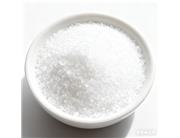
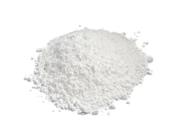
Appearance | White to tan crystalline powder |
Melting Point | 218-222 °C (lit.) |
Boiling Point | 320 °C at 5 mmHg |
Density | 1.57 g/cm³ |
Vapor Pressure | <0.1 mm Hg at 0 °C |
Flash Point | 324 °C |
Description of 3,3',4,4'-Benzophenonetetracarboxylic dianhydride
3,3',4,4'-Benzophenonetetracarboxylic dianhydride (BTDA, CAS: 2421-28-5), also known as 4,4'-carbonyldiphthalic anhydride, is a vital aromatic dianhydride monomer for high-performance polymers. BTDA is widely used to synthesize polyimides with exceptional thermal stability (Tg >300°C), mechanical strength, and low dielectric properties, ideal for aerospace composites, flexible electronics, insulation films, and optical materials in displays and sensors. Its ketone linkage enhances solubility and processability.
Application of 3,3',4,4'-Benzophenonetetracarboxylic dianhydride
3,3',4,4'-Benzophenonetetracarboxylic dianhydride (BTDA) is a versatile dianhydride monomer primarily used in the synthesis of high-performance polyimides, offering exceptional thermal stability (Tg >300°C), mechanical robustness, and low dielectric constants for applications in microelectronics coatings, adhesives, gas separation membranes, and aerospace composites. As a thermal curative, it enhances dimensional stability, chemical resistance, and dielectric properties in epoxy powder coatings for automotive finishes, industrial sealants, and corrosion protection. Additionally, BTDA enables the preparation of nanocomposite films and cellulose acetate hydrogels for biomedical devices and advanced sensors.
Storage of 3,3',4,4'-Benzophenonetetracarboxylic dianhydride
BTDA is hygroscopic and moisture-sensitive, requiring storage under an inert atmosphere (e.g., nitrogen) at room temperature in sealed, airtight containers to prevent hydrolysis. Protect from light and humidity using desiccators. For long-term stability, refrigerate at 2-8°C. Avoid exposure to water or air.




 China
China