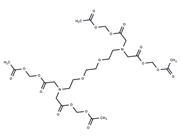
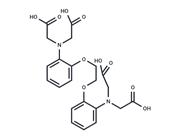
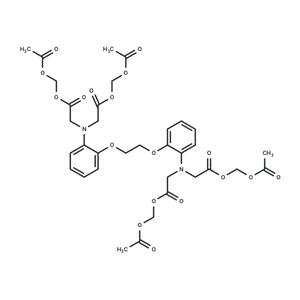
| Name | BAPTA-AM |
| Description | BAPTA-AM is a calcium chelator that is cell-permeable and selective, blocking hERG, hKv1.3, and hKv1.5 channels (IC50=1.3/1.45/1.23 μM). BAPTA-AM has a 105-fold higher affinity for Ca2+ than for Mg2+, and can be used for the role of calcium in cell signaling. |
| Cell Research | Instructions for use
I. Solution preparation
1. Prepare BAPTA-AM storage solution: Dissolve BAPTA-AM in anhydrous DMSO to prepare a 50 mM storage solution; (it is recommended to store at -20 ℃ or -80 ℃ in the dark after aliquoting).
2. Prepare working solution: Dilute BAPTA-AM storage solution into cell culture medium to a final concentration of 6-50 μM.
II. Cell preparation
1. Grow cells to an appropriate density. For adherent cells, they can be planted in culture dishes or culture plates; for suspended cells, adjust the cell concentration to 2×10^6 cells/mL.
2. Incubate cells with BAPTA-AM solution, usually at 37℃, 5% CO₂ for 30-60 minutes, with gentle shaking during the period.
3. Remove excess dye: After incubation, wash cells with calcium-free buffer to remove BAPTA-AM that has not entered the cells.
4. For adherent cells, they can be directly washed with calcium-free PBS; for suspended cells, the cells need to be collected by centrifugation and then resuspended with calcium-free PBS.
5. Detection of changes in calcium ion concentration: You can choose the appropriate detection method according to the experimental requirements:
Fluorescence microscope detection: observe the changes in fluorescence intensity in cells. The decrease in fluorescence intensity indicates a decrease in calcium ion concentration.
Flow cytometry detection: analyze the changes in fluorescence intensity in cells through flow cytometry.
Fluorescence spectrometer detection: measure the changes in fluorescence intensity of cell suspension.
The above information is based on published literature. Experimental procedures should be appropriately modified to meet specific research demands. |
| In vitro | METHODS: Chondrocytes were treated with BAPTA-AM (10 μM) and FAC (100 μM) for 24 h. Intracellular ROS levels were measured using the Reactive Oxygen Species Assay kit.
RESULTS: FAC promoted ROS production and this effect was inhibited by the calcium chelator BAPTA-AM. [1]
METHODS: Rat fibroblast RAT2 and Xenopus cells were treated with BAPTA-AM (50 μM) for 1 h, and microtubule depolymerization was detected by Immunostaining.
RESULTS: BAPTA AM treatment for 30 min resulted in almost complete disassembly in most cells, and microtubules were uniformly depolymerized in cells within 60 min. [2] |
| In vivo | METHODS: To investigate the effect on ethanol-induced locomotor activity, BAPTA-AM (0-10 mg/kg, Cremophor EL 1.25% (v/v) in distilled water) was injected intraperitoneally into Swiss (RjOrl) mice, followed by ethanol (0-4 g/kg) 30 min later.
RESULTS: Pretreatment with BAPTA-AM blocked the locomotor stimulus produced by ethanol without altering basal locomotion. On the contrary, BAPTA-AM reversed the ethanol-induced hypnosis. [3]
METHODS: To investigate the effect on LPS-induced blood-brain barrier leakage, BAPTA-AM (12 mg/kg, 0.01% pluronic acid in sterile saline) was injected intravenously into FVB mice, followed 30 min later by intraperitoneal injection of LPS (25 mg/kg).
RESULTS: BAPTA-AM reduced LPS-induced blood-brain barrier leakage. [4] |
| Storage | Powder: -20°C for 3 years | In solvent: -80°C for 1 year
Shipping with blue ice/Shipping at ambient temperature. |
| Solubility Information | DMSO : 100 mg/mL (130.77 mM), Sonication is recommended.
10% DMSO+40% PEG300+5% Tween-80+45% Saline : 2.5 mg/mL (3.27 mM), Sonication is recommended.
|
| Keywords | PotassiumChannel | Potassium Channel | KcsA | Inhibitor | inhibit | BAPTA-AM | BAPTAAM | BAPTA AM |
| Inhibitors Related | Minoxidil sulfate | Uridine 5'-monophosphate disodium salt | Tannic acid | Hydrochlorothiazide | 1,8-Cineole | Tetraethylammonium bromide | Ursodeoxycholic acid | Chenodeoxycholic acid | Minoxidil | 2,2,2-Trichloroethanol | Chlorzoxazone | Indapamide |
| Related Compound Libraries | Ferroptosis Compound Library | Bioactive Compound Library | Pain-Related Compound Library | NO PAINS Compound Library | Bioactive Compounds Library Max | Potassium Channel Targeted Library | Ion Channel Targeted Library | Anti-COVID-19 Compound Library | Anti-Cancer Compound Library | Human Metabolite Library |


 United States