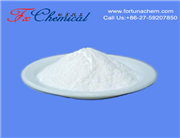
Items | Specifications | Results |
Appearance | Crystalline powder | Crystalline powder |
Assay % | 99.5—100.5 | 99.8% |
Identification | Conforms | Conforms |
Assay W/% | 98.5~101.5 | 99.5 |
Electrical conductivity(μs.cm-1) | ≤150 | 22.1 |
PH | 4.1~5.6 | 5.0 |
Easily carbonizable substances | Pass to experiment | Pass to experiment |
Residue on ignition W/% | ≤0.1 | 0.07 |
Loss on drying W/% | ≤0.2 | 0.10 |
Clarity and color of solution | Pass to experiment | Pass to experiment |
Arsenic(As)mg/kg | ≤ 2 | < 1 |
Sulfate(SO42-) W/% | ≤0.02 | <0.01 |
Ammonium(NH4+)W/% | ≤0.02 | <0.02 |
Heavy metals(Pb)(mg/kg) | ≤ 10 | <8 |
Conclusion | The product conforms to the above specifications. |
Taurine (2-aminoethanesulfonic acid) is a sulfur-containing organic compound that is widely distributed in animal tissues. Though often referred to as an amino acid, it is not incorporated into proteins and is technically a beta-amino sulfonic acid. Its chemical formula is C₂H₇NO₃S.
Key Facts:
Naturally synthesized in the human body from cysteine (with vitamin B6 as a cofactor).
Found abundantly in the brain, retina, heart, and skeletal muscles.
Rich dietary sources include meat, fish, and dairy; it’s also added to many energy drinks.
Major Uses of Taurine:
Energy Drinks & Functional Beverages:
One of the most well-known uses—added for its potential role in reducing fatigue, supporting mental focus, and enhancing physical performance (often combined with caffeine).
Dietary Supplements:
Used to support cardiovascular health, eye function, and neurological development.
May help regulate electrolyte balance, calcium signaling, and antioxidant defense.
Infant Formula:
Added because newborns (especially premature infants) cannot synthesize enough taurine on their own. It supports brain and retinal development.
Animal Feed:
Essential nutrient for cats—cats cannot produce taurine, and deficiency can cause blindness or heart failure (dilated cardiomyopathy). Included in all commercial cat foods.
Medical & Therapeutic Research:
Studied for potential benefits in managing conditions like hypertension, diabetes, epilepsy, and liver disease due to its anti-inflammatory and membrane-stabilizing properties.
Sports Nutrition:
Some athletes use taurine to reduce muscle damage, improve endurance, and aid recovery.
Safety:
Generally recognized as safe (GRAS) by the FDA.
Typical energy drinks contain 500–2000 mg per serving; daily intakes up to 3,000 mg are considered safe for adults.
In summary, taurine is a conditionally essential nutrient with roles in neurological function, cardiovascular health, and metabolism—used widely in nutrition, medicine, and pet care.






 China
China