Specification of Gibberellic acid (GA) CAS 77-06-5:
Items | Specifications | Results |
Appearance | White to slightly yellowish crystalline powder | White crystalline powder |
Loss on Drying | ≤0.5% | 0.03% |
Specific Rotation[a]20D | ≥+80° | +86° |
Solution color | Clear and colorless | Complies |
Assay(HPLC,GA3) | ≥90% | 90.50% |
Conclusion | The product conforms to the above specifications. |
Welcome to inquire us to get the complete COA
Gibberellic Acid (GA₃)
Gibberellic acid (GA₃) is the most well-known and widely used member of the gibberellins, a large class of plant hormones (phytohormones) that regulate growth and development. It was one of the first gibberellins to be discovered and is now produced commercially through fermentation.
What It Is & History:
Origin: It was first identified from the fungus Gibberella fujikuroi, which causes "foolish seedling" disease in rice—infected plants grow excessively tall and spindly.
Function: In plants, gibberellins naturally promote cell elongation and division, breaking seed and bud dormancy, flowering, and fruit development.
Form: For commercial use, it is formulated as a white to pale yellow crystalline powder that is soluble in alcohol and can be made into soluble concentrates or tablets for application.
Major Uses & Applications
Gibberellic acid is a powerful tool in agriculture, horticulture, and brewing. Its applications generally revolve around manipulating plant growth to achieve desired outcomes.
1. Agriculture & Horticulture
Fruit Production & Size Enhancement:
Seedless Grapes: The most famous use. GA₃ is sprayed on grapevines to make clusters longer and looser, and to dramatically increase the size of seedless (Thompson) grapes.
Citrus: Used to delay rind aging in lemons and oranges, keeping them fresh-looking longer on the tree. It can also be used to increase fruit size.
Stone Fruits: In cherries, it can improve fruit firmness and delay harvest.
Breaking Dormancy & Promoting Germination:
Applied to seeds, tubers, or bulbs of many species (e.g., potatoes, tree seeds, lettuce) to break dormancy and induce uniform, rapid germination, especially when environmental conditions are poor.
Bolting & Flowering:
Can induce flowering in plants that require specific day-length or cold treatments (vernalization). For example, it can force flowering in biennials like celery or cabbage in their first year.
Applied to pineapple to synchronize and induce flowering for a uniform harvest.
Male Sterility in Breeding:
Used in plant breeding programs (e.g., for rice, sorghum, cotton) to induce male sterility, facilitating the production of hybrid seeds.
2. Brewing & Malting (Barley)
3. Sugarcane Industry
4. Home Gardening & Specialized Uses
Gardeners use it to stimulate germination of old or stubborn seeds.
Used to produce larger, "giant" vegetables in competitions (like giant pumpkins).
Applied to keep celery stalks long and crisp.
Mechanism of Action (Simplified)
Gibberellic acid works primarily by "releasing the brakes" on plant growth.
It triggers the degradation of DELLA proteins, which are growth repressors inside plant cells.
With these repressors removed, the plant activates genes involved in cell elongation and division.
This leads to rapid stem growth, mobilization of food reserves in seeds, and other growth responses.
Important Considerations
Concentration is Critical: The effect is highly dose-dependent. Too little may have no effect; too much can cause excessive, weak growth or even toxicity.
Not a Universal Solution: Its effectiveness varies greatly between plant species and even cultivars.
Regulation: It is a regulated plant growth regulator. Users must follow label instructions for specific crops, timings, and application rates.
Safety: It has low toxicity to mammals and birds but should be handled with care. It degrades relatively quickly in the environment.
Summary Table
| Application Area | Specific Use | Desired Outcome |
|---|
| Fruit Farming | Seedless table grapes | Larger, looser clusters of grapes |
| Agriculture | Malting barley | Uniform germination, higher enzyme activity |
| Agriculture | Sugarcane | Increased stem length and sugar yield |
| Horticulture | Seed/tuber treatment | Break dormancy, promote uniform germination |
| Plant Breeding | Various crops (rice, cotton) | Induce male sterility for hybrid seed production |
| Specialty Ag. | Pineapple fields | Synchronize and induce flowering |
In essence, gibberellic acid is a potent biological tool that allows growers and scientists to precisely manipulate key stages of plant development—from seed germination to fruit size—to improve crop yield, quality, and production efficiency.
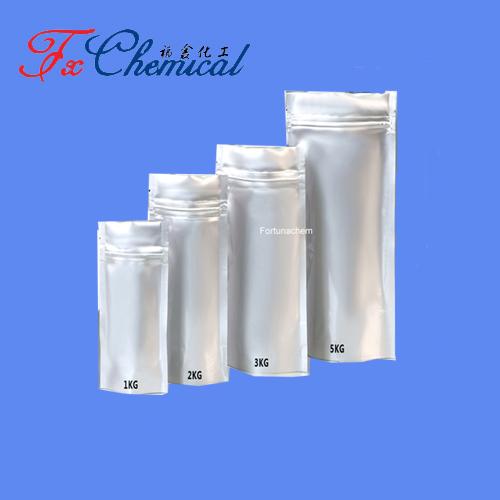
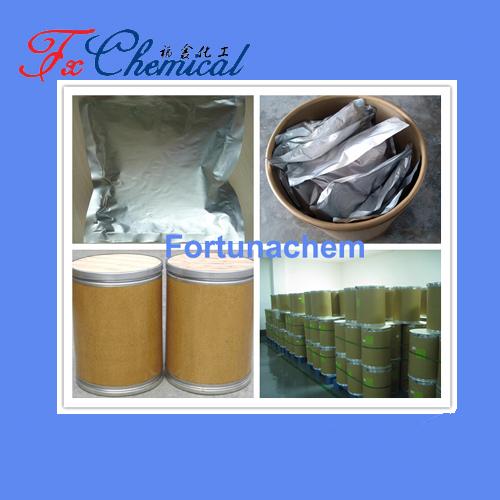
Package of Gibberellic acid (GA) CAS 77-06-5:
Application of Gibberellic acid (GA) CAS 77-06-5:
Gibberellic Acid is a hormone that is found in plants which promotes the growth and elongation of cells.





 China
China