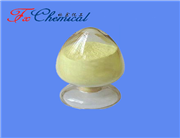
Albendazole Cas 54965-21-8
Specification
Items | Specification | Result |
Appearance | White or almost white powder | Complies |
Assay | ≥98.5% | 99.7% |
Residue on ignition | ≤0.2% | Complies |
Loss on drying | ≤0.5% | 0.26% |
Welcome to contact with us to get more information.
Albendazole is a broad-spectrum, synthetic anthelmintic (anti-parasitic) drug. Chemically, it is a member of the benzimidazole class of compounds. It is a prodrug, meaning its activity depends on metabolic conversion in the body.
1. Chemical Identity
2. Chemical Structure and Key Features
The structure of Albendazole can be broken down into three key parts:
Benzimidazole Core: A fused bicyclic system consisting of a benzene ring fused to an imidazole ring (a five-membered ring with two nitrogen atoms). This core is essential for binding to the target in parasites.
Carbamate Group (-NH-COOCH₃): Attached to the 2-position of the benzimidazole core. This functional group is critical for its anthelmintic activity.
Propylthio Ether Group (-S-CH₂-CH₂-CH₃): Attached to the 5-position of the benzene ring. This side chain influences the drug's pharmacokinetics, particularly its absorption and distribution.
Simplified Structural Diagram:
O
||
NH-C-O-CH₃ <-- Carbamate Group
/
Benzimidazole Core (Fused Rings)
\
S-CH₂-CH₂-CH₃ <-- Propylthio Group
3. Mechanism of Action (How it Kills Parasites)
Albendazole's primary mechanism is the selective and irreversible inhibition of helminth-specific β-tubulin.
Binding to Tubulin: Albendazole, and its active metabolite, have a high affinity for parasite β-tubulin. They bind to the colchicine-sensitive site of this protein.
Inhibition of Polymerization: This binding prevents the polymerization of tubulin dimers into microtubules.
Disruption of Cellular Functions: Microtubules are critical components of the cytoskeleton and are involved in numerous cellular processes. Their destruction leads to:
Inhibition of Glucose Uptake: The parasite is deprived of energy.
Blockage of Secretory Processes: Disruption of transport within the cell.
Immobilization and Death: Ultimately, the parasitic cells are unable to maintain their structure or function, leading to their death.
Selective Toxicity: This action is selectively toxic to parasites because albendazole has a much higher affinity for helminth β-tubulin than for mammalian β-tubulin, providing a reasonable safety margin.
4. Metabolism (The Prodrug)
Albendazole itself is poorly absorbed from the gastrointestinal tract. It is rapidly metabolized in the liver by oxidation of its sulfur atom.
First-Pass Metabolism: The propylthio group (-S-CH₂-CH₂-CH₃) is oxidized first to the sulfoxide and then to the sulfone.
Active Metabolite: Albendazole sulfoxide is the primary metabolite responsible for the systemic anthelmintic activity. It is this form that circulates in the blood and reaches the tissues and parasites.
Role of the Sulfoxide: The formation of the sulfoxide metabolite also significantly improves the water solubility of the drug, aiding its distribution throughout the body.
5. Major Uses in Medicine
Albendazole is a cornerstone of anti-parasitic treatment, used against a wide variety of worm (helminth) infections, including:
Intestinal Worm Infections: Hookworm, pinworm, whipworm, roundworm.
Hydatid Disease (Echinococcosis): Caused by the larval stage of the dog tapeworm, Echinococcus granulosus. It is used to shrink cysts, often as an adjunct to surgery.
Neurocysticercosis: A parasitic infection of the central nervous system caused by the larval stage of the pork tapeworm, Taenia solium. This is one of its most critical uses.
Other Tissue Worm Infections: Such as Strongyloides stercoralis and Cutaneous Larva Migrans.
6. Important Considerations
Administration with Fatty Food: Absorption of albendazole is significantly enhanced when taken with a fatty meal, which is often recommended to improve its efficacy.
Safety in Pregnancy: It is contraindicated in pregnancy (FDA Pregnancy Category D) due to potential teratogenic (birth defect-causing) effects.
In conclusion, Albendazole is a synthetic benzimidazole carbamate whose chemical structure allows it to be metabolized into an active form that selectively disrupts the microtubule system of parasitic worms, leading to their eradication. Its broad-spectrum activity makes it a vital drug in global public health.
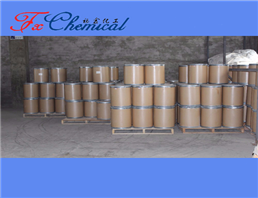
Packages

Delivery

Payment term
* Wire Transfer/Telegraphic Transfer
* Western Union
* MoneyGram
* L/C
Contact information
Spring Zhang
Email: export@fortunachem.com
Skype: Fortunachem201304
QQ:3169620873
Tel: +86-27-59207892
Website: www.fortunachem.com





 China
China