Specification of Clindamycin hydrochloride CAS 21462-39-5:
Items | Specifications | Results |
Appearance | A White or almost white,crystalline powder | White crystalline powder |
Identification | A:The retention time of the major peak of the Samplesolution corresponds to that of the Standard solution,as obtained in the Assay. B.Infrared Absorption | Conform Conform |
Crystallinity | Meets the requirements | Conform |
Acidity | Ph 3.0~5.5 | 4.4 |
Related compounds | Clindamycin B≤2.0% 7-epiclindamycin≤4.0% Other individual related compound≤1.0% Total of all related compounds≤6.0% | 0.68% 0.47% 0.19% 1.8% |
Water | 3.0%~6.0% | 3.8% |
Residue on ignition | ≤0.5% | 0.02% |
Bulk density | --- | 0.41g/cm3 |
Tapped density | --- | 0.56g/cm3 |
Residual solvents | Ethanol≤0.5% Acetone≤0.5% Chloroform≤0.006% N,N-Dimethylformamide≤0.088% | None detected 0.023% None detected None detected |
Assay | Not less than 800μg/mg | 875μg/mg |
Conclusion | The product conforms to the above specifications. |
Welcome to inquire us to get the complete COA
Clindamycin hydrochloride is a salt form of clindamycin, a lincosamide antibiotic. It is a semi-synthetic derivative of lincomycin, designed for better absorption and bioavailability, primarily formulated for oral administration (capsules, oral solution).
Primary Mechanism of Action
Bacteriostatic: It inhibits bacterial protein synthesis by binding to the 50S subunit of the bacterial ribosome.
Effective against aerobic gram-positive cocci and, critically, many anaerobic bacteria (both gram-positive and gram-negative).
Primary Uses (Indications)
Due to its excellent tissue penetration and anaerobic coverage, it is prescribed for:
Serious Anaerobic Infections: Especially below the diaphragm (e.g., intra-abdominal abscesses, peritonitis, endometritis).
Skin and Soft Tissue Infections: Caused by Staphylococcus aureus (including some MRSA strains) and streptococci.
Bone and Joint Infections: Particularly osteomyelitis caused by susceptible organisms.
Oral Infections: Used in dentistry for severe dental abscesses involving anaerobes.
Alternative to Penicillin: For patients with severe penicillin allergy, in conditions like tonsillitis or cellulitis.
Adjunct Therapy: Used with other drugs for infections like pelvic inflammatory disease (PID) or toxoplasmosis.
Crucial Warning & Side Effect
Summary Table
| Feature | Clindamycin Hydrochloride |
|---|
| Drug Class | Lincosamide antibiotic (bacteriostatic) |
| Key Strength | Excellent anaerobic and gram-positive coverage |
| Common Forms | Oral capsules, oral solution |
| Main Uses | Anaerobic infections, skin/soft tissue infections, bone infections, dental abscesses, penicillin-allergy alternative |
| Critical Risk | High association with C. diff colitis—must be used judiciously. |
| Note | Other clindamycin salts (e.g., phosphate) are used for topical or injectable formulations. |
Disclaimer: This is a prescription-only antibiotic. Its use requires a confirmed or strongly suspected bacterial infection susceptible to clindamycin, as misuse contributes to resistance and serious adverse effects. Always complete the prescribed course.
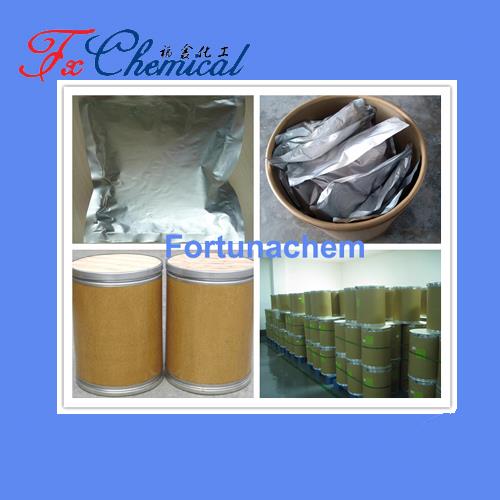
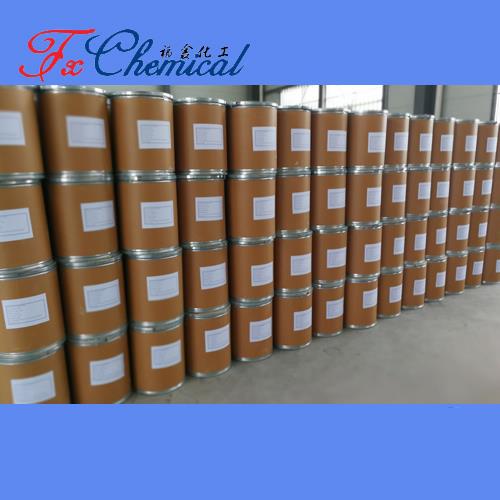
Package of Clindamycin hydrochloride CAS 21462-39-5:
Application of Clindamycin hydrochloride CAS 21462-39-5:
Clindamycin hydrochloride is a salt of clindamycin, a semi-synthetic lincosamide. Like other members of the lincosamide family, clindamycin is a broad spectrum antibiotic with activity against anaerobic bacteria and protozoans.




 China
China