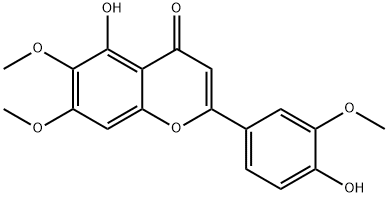
Cirsilineol, a natural flavone compound, selectively inhibits IFN-γ/STAT1/T-bet signaling in intestinal CD4+ T cells. Cirsilineol has potent immunosuppressive and anti-tumor properties. Cirsilineol significantly ameliorates trinitro-benzene sulfonic acid (TNBS)-induced T-cell-mediated experimental colitis in mice[1].
ChEBI: A trimethoxyflavone that is flavone substituted by methoxy groups at positions 6, 7 and 3' and hydroxy groups at positions 5 and 4' respectively.
cirsilineol (3, 10, and 30 mg/kg) significantly ameliorates TNBS-induced Th1-mediated colitis through inhibiting IFN-γ/STAT1/T-bet signaling in CD4+ T cells.
| Animal Model: | 8-10-week-old female C57BL/6, BALB/c and DO11.10 transgenic mice with TNBS (10 mg; 100 μL)[1] |
| Dosage: | 3, 10, 30 mg/kg |
| Administration: | IP; daily; for 11 days |
| Result: | Showed a significant improved effect on the body weights and survival rate of mice.
Markedly reduced inflammatory infiltration, restoration of the destructive mucosal architecture and remission of edema.
|
IFN-γ | IL Receptor | gp120/CD4 | STAT | TGF-β/Smad | JAK | PARP | Caspase | P450 (e.g. CYP17)
[1] Yang Sun, et al. Novel immunomodulatory properties of cirsilineol through selective inhibition of IFN-gamma signaling in a murine model of inflammatory bowel disease. Biochem Pharmacol. 2010 Jan 15;79(2):229-38. DOI:
10.1016/j.bcp.2009.08.014