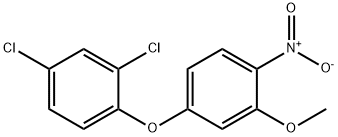
Chlomethoxyfen is a largely obsolete herbicide that was once used to rice weeds. It has a low aqueous solubility and is not volatile. It is not expected to persist in soil systems. It has a low oral toxicity to mammals and is a known skin, eye and respiratory tract irritant as well as being a skin sensitiser. Little is known regarding its potential to cause more serious health issues in humans. There are also significant data gaps regarding its ecotoxicology although some data suggests it is not highly toxic to aquatic organisms.
Chlomethoxyfen-d3 is the deuterium labeled n-Octyl β-D-glucopyranoside[1].
The commercial production of chlomethoxyfen involves the synthesis of an aromatic ether compound. The process typically includes chlorination and etherification reactions using substituted phenols and chlorinated aromatic intermediates.
ChEBI: Chlomethoxyfen is an aromatic ether.
A Protoporphyrinogen oxidase inhibitor. Systemic, selective, rapidly absorbed by roots with limited translocation
[1] Russak EM, et al. Impact of Deuterium Substitution on the Pharmacokinetics of Pharmaceuticals. Ann Pharmacother. 2019;53(2):211-223. DOI:
10.1080/02688697.2018.1500521