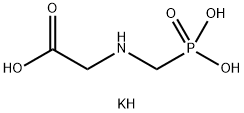
Glyphosate-monopotassium is commercially produced by neutralising glyphosate acid with potassium hydroxide. The process begins with the synthesis of glyphosate (N-phosphonomethylglycine), typically via the reaction of phosphorous acid, formaldehyde, and glycine. This glyphosate acid is then reacted with potassium hydroxide under controlled conditions to yield the monopotassium salt, which improves solubility and plant uptake.
Broad-spectrum, systemic, contact action translocated and non-residual. Inhibition of EPSP synthase.