Background
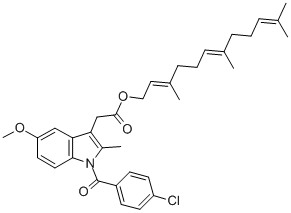
Indomethacin can cause gastric ulceration by various mechanisms, including injury through inhibition of prostaglandin (PG) synthesis, reduction in local blood flow, regional irritation, and inhibition of tissue regeneration.
Specific Modeling Methods
Rat: albino Sprague-Dawley male adult (period: 2 weeks)
Administration: 100 mg/kg p.o. single dose
Note
(1) All animals fasted 24 h before drug administration.
(2) Indomethacin were dissolved in saline with 5% NaOH.
Modeling Indicators
Gastric tissue macroscopic alterations: Showed prominent mucosal folds and severe erosion, pronounced ulceration and bleeding foci in the gastric mucosa.
Histopathological changes: Showed severe erosion of the mucosa, reaching down to the lamina muscularis; observed hemorrhagic infiltration, edema in the submucosa, and severe hyperemia of the vessels.
Molecular changes: Showed intense Tnf-α expression.
Biochemical changes: Increased MDA, TOS levels, reduced TAS levels, CAT and GPx activities and GSH levels.
Correlated Product(s): Indomethacin sodium hydrate (HY-14397A)
Opposite Product(s): Carnosic acid (HY-N0644)