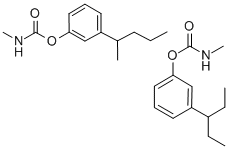
Bufencarb is an obsolete carbamate insecticide. It is moderately soluble in water and is highly volatile. It is highly toxic to birds, aquatic species and moderately toxic to honeybees. It is highly toxic to mammals if ingested.
Solid at room temperature; melts between26–39°C (78.8–102.2°F); density 1.024 at 26°C (78.8°F); insoluble in water; soluble inmethanol, benzene, xylene.
Bufencarb is a carbamate pesticide used mainly as an insecticide. Ingestion and other exposures to the chemical can cause various symptoms. Bufencarb may be absorbed through the skin.
ChEBI: Bufencarb is an organic molecular entity.
Bufencarb is commercially produced primarily through the reaction of 3-substituted phenols, such as 3-(1-methylbutyl)phenol or 3-(1-ethylpropyl)phenol, with methyl isocyanate to form the corresponding N-methylcarbamate esters. The technical product is typically a mixture of positional and stereoisomers. The synthesis is carried out under controlled temperature and solvent conditions to ensure safe handling of methyl isocyanate and to optimise yield.
Moderately toxic by ingestion and skin con�tact; cholinesterase inhibitor; signs of poisoning include headache, weakness, salivation,tearing, blurred vision, loss of muscle coor�dination, vomiting, diarrhea, and difficulty inbreathing.
LD50 oral (mouse): 85 mg/kg
LD50 skin (rat): 240 mg/kg
LD50 skin (rabbit): 400 mg/kg.
Acetylcholine esterase inhibitor