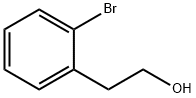
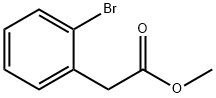
General method: anhydrous CaCl2 (1.12 g, 10.2 mmol) was dissolved in ethanol (50 mL) in a three-necked round-bottomed flask under argon protection. The solution was cooled to 0 °C, followed by slow addition of NaBH4 (0.19 g, 5.1 mmol) at the same temperature. The resulting suspension was stirred at 0 °C for 30 min, after which an ethanol solution (60 mL) of methyl 2-(2-bromophenyl)acetate (S5a, 1.0 g, 3.4 mmol) was added dropwise at the same temperature. The reaction mixture was continued to be stirred at 0 °C for 30 min, and then raised to room temperature and stirred for 15 h. The reaction was carried out at 0 °C. Upon completion of the reaction, 50 mL of a mixture of water and dichloromethane (1:1, v/v) was added to the mixture and sonicated for 1 hour. The mixture was vacuum filtered through diatomaceous earth and the filtrate was concentrated under reduced pressure. The crude product was dissolved in 50 mL of water and extracted with dichloromethane (3 x 30 mL). The organic phases were combined, dried with anhydrous Na2SO4 and the solvent was evaporated under reduced pressure to give the target product 2-(2-bromophenyl)ethanol (S6a-S6d). The products were characterized as follows:
2-(2-bromo-4,5-dimethoxyphenyl)ethanol (S6a): brown oil in 60% yield (2.56 g);
2-(2-bromo-5-methoxyphenyl)ethanol (S6b): colorless transparent oil in 42% yield (1.29 g);
2-(2-bromo-4-methoxyphenyl)ethanol (S6c): colorless transparent oily substance, yield 55% (1.03 g);
2-(2-bromophenyl)ethanol (S6d): colorless transparent oily substance, yield 55% (2.41 g).