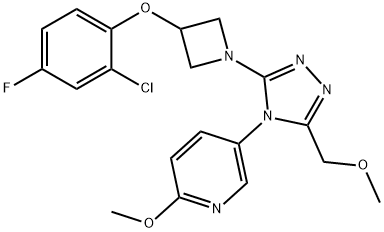
Cligosiban (0.9 mg/kg; 3 to 5 minutes after injection of Apomorphine (HY-12723); i.v.) shows CNS permeability and inhibits Apomorphine-induced ejaculation in an anesthetized rat CNS neuronal discharge model by modulating oxytocin (OT)-mediated responses in the nucleus tractus solitarius (NTS)[1].
Cligosiban (1 mg/kg; i.v. or p.o.) produces 4 metabolites in rat plasma, with demethylation and glucuronidation being the major metabolic pathways, and the pharmacokinetic profile is favorable[2].
| Animal Model: | Male Sprague Dawley rats (280-350 g), Anesthetized Rat CNS Neuronal Firing Model (Pre injection of Apomorphine (200 mg/kg, intravenous injection) into rats to regulate neuronal firing)[1]. |
| Dosage: | 0.9 mg/kg |
| Administration: | Intravenous injection (i.v.); 3 to 5 minutes after injection of Apomorphine |
| Result: | Reversed the reduced firing of nucleus tractus solitaries (NTS) neurons induced by Apomorphine and reduced the bulbospongiosum burst pattern and contraction amplitude associated with ejaculation. |
| Animal Model: | Male Sprague-Dawley rats with body weight of 200-220g[2]. |
| Dosage: | 1 mg/kg |
| Administration: | Intravenous injection (i.v.) or oral gavage (p.o.) |
| Result: | Was rapidly absorbed into the plasma after oral administration and reached its maximum blood concentration 1.41 hours after administration, and was quickly eliminated from the plasma after absorption. |