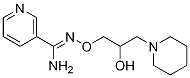
[1] ÁGOTA PETŐ. Pharmacological Overview of the BGP-15 Chemical Agent as a New Drug Candidate for the Treatment of Symptoms of Metabolic Syndrome.[J]. Molecules, 2020, 25 2. DOI:
10.3390/molecules25020429[2] DARREN C HENSTRIDGE. Activating HSP72 in rodent skeletal muscle increases mitochondrial number and oxidative capacity and decreases insulin resistance.[J]. ACS Applied Nano Materials, 2014: 1881-1894. DOI:
10.2337/db13-0967[3] ESZTER SZABADOS . BGP-15, a nicotinic amidoxime derivate protecting heart from ischemia reperfusion injury through modulation of poly(ADP-ribose) polymerase[J]. Biochemical pharmacology, 2000, 59 8: Pages 937-945. DOI:
10.1016/s0006-2952(99)00418-9[4] FARKAS SARNYAI. BGP-15 Protects Mitochondria in Acute, Acetaminophen Overdose Induced Liver Injury[J]. Pathology & Oncology Research, 2019, 24 1: 1797-1803. DOI:
10.1007/s12253-019-00721-1[5] KATALIN SUMEGI. BGP-15 Protects against Oxidative Stress- or Lipopolysaccharide-Induced Mitochondrial Destabilization and Reduces Mitochondrial Production of Reactive Oxygen Species[J]. PLoS ONE, 2017. DOI:
10.1371/journal.pone.0169372[6] ALIZ SZABO . Activation of mitochondrial fusion provides a new treatment for mitochondria-related diseases[J]. Biochemical pharmacology, 2018, 150: Pages 86-96. DOI:
10.1016/j.bcp.2018.01.038[7] GEETA SAPRA. The small-molecule BGP-15 protects against heart failure and atrial fibrillation in mice.[J]. Nature Communications, 2014: 5705. DOI:
10.1038/ncomms6705[8] BINNUR EROGLU. Therapeutic inducers of the HSP70/HSP110 protect mice against traumatic brain injury[J]. Journal of Neurochemistry, 2014, 130 5: 626-641. DOI:
10.1111/jnc.12781