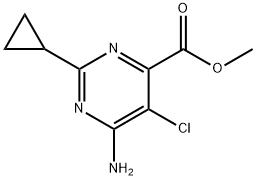
Aminocyclopyrachlor-methyl is produced through the same overarching industrial pattern used for other amine-salt forms of pyrimidine- or pyridine-based herbicides: manufacturers first construct and purify the parent acid, aminocyclopyrachlor, then convert it into the dimethylammonium salt under controlled neutralisation conditions. Upstream production focuses on assembling the heterocyclic core, introducing the required chloro and amino substituents, and refining the crude acid to technical-grade purity through solvent washes, phase separations, and crystallisation. To generate the methyl derivative, the purified acid is reacted with a suitable methylating agent under conditions designed to achieve full conversion while suppressing unwanted side reactions or isomer formation.